Every entertainment venue operator knows the pattern: Friday and Saturday nights are fully booked weeks in advance, Sunday afternoon fills up with families, and then Tuesday through Thursday sit at 30–40% capacity while your fixed costs run at 100%.
The economics are brutal. Rent, payroll, utilities, and equipment financing don't drop because your lanes are half-empty on a Wednesday. And unlike a restaurant that can send staff home during a slow service, most activity venues have minimum staffing requirements regardless of how many guests walk through the door.
The good news: how to fill a bowling alley on weekdays — or any other entertainment venue during slow nights — is a solved problem. Operators who consistently run at 70–80% capacity even on Tuesday and Wednesday do so with a specific mix of nine strategies. This is that playbook.
None of these require massive investment. Most can be launched in a week. The key is understanding that weeknight attendance doesn't happen by accident — it happens because operators create specific reasons for guests to show up on nights that have no organic pull.
Strategy 1: Themed Nights and Recurring Events
The single most reliable driver of off-peak traffic is a recurring event that gives guests a specific reason to come on a specific night. Not a vague "weeknight special" — a themed night with a name, a format, and a committed regular audience.
Why this works: humans are creatures of habit. Once a group decides that "Thursday is trivia night at [Venue]," that habit is hard to break. Themed nights build social identity around your venue — it becomes the place where your friend group goes every week, not just a place you visit occasionally.
Themed Night Formats That Work at Activity Venues
- Industry nights — "Industry Mondays" — all food and beverage workers, healthcare workers, or teachers get 20% off. These groups are large, social, and often work irregular hours that make weekends impossible. They become regulars.
- Date night packages — Tuesday or Wednesday "date night" with a prix fixe experience: two rounds, one appetizer, one dessert. Mid-week date nights have less competition from restaurants and movies. Price it as a value vs weekend rates.
- Trivia nights — partner with a local trivia company (many operate as contractors) to run weekly trivia in your F&B area before or after activity bookings. Trivia regulars show up weekly and buy food and drinks even when they're not booking lanes.
- Corporate happy hour nights — Thursday 5–8pm corporate happy hour block: private bay or lane rentals at a reduced per-person rate for groups of 8–20. Corporate guests spend more per head on F&B and book again for team events.
- Competitive leagues (weekly) — see Strategy 3 below — leagues are the strongest recurring attendance driver in the category.
The critical detail: commit to the theme for at least eight weeks before evaluating. Themed nights need time to build audience. Pulling the plug after two sessions because attendance was thin kills the habit-formation process.
Strategy 2: Weeknight-Only Pricing and Value Packages
Weeknight pricing doesn't mean cutting rates across the board — it means creating distinct value propositions that make a weeknight visit feel like a smart choice rather than a consolation prize.
The frame matters. "$10 off on Tuesdays" feels like a discount. "Tuesday Unlimited: two hours of play with unlimited soft drinks for $39" feels like a package. Same economics, completely different psychology.
Weeknight Pricing Models That Convert
- Flat-rate unlimited packages — fixed price for a time window (typically 90 min–2 hrs) with specific add-ons bundled. Works especially well for bowling, axe throwing, and golf simulators where per-person or per-round pricing creates friction.
- Add-on bundles — base activity rate stays the same, but weeknight guests get a free add-on: shoe rental, range ball bucket, axe throwing upgrade to the premium target — something with perceived value that has low marginal cost for you.
- Early bird windows — "5–7pm Tuesday–Thursday" block at a reduced rate. Fills your earliest sessions (which tend to be dead), and early guests often stay for food and drinks and overlap with the next booking wave.
- Bring-a-friend rates — "Pay for two, get the third free" on weeknights. Friend groups rarely come in pairs — they come in threes and fours. This offer is structurally designed for actual social group behavior.
For a deeper look at how to structure weeknight pricing without cannibalizing your weekend rates, read our full guide on dynamic pricing for entertainment venues. The key principle: weeknight pricing should feel like access to a different experience, not a marked-down version of the weekend.
Strategy 3: Leagues and Recurring Competition Programs
Leagues are the most powerful weeknight attendance driver in entertainment venue history, and they've been underutilized by the newer generation of activity venues. Bowling alleys built their entire mid-week business model on leagues for 50 years. The same mechanics apply to axe throwing, golf simulators, pickleball, mini golf, and virtually any competitive activity format.
A league is a recurring commitment: the same group of people shows up every week for a set period (typically 6–12 weeks) to compete, accumulate points, and claim a prize at the end. The commitment is built in from the moment they register — you've filled your Tuesday night for the entire season before the first session starts.
How to Launch a League Program
- Start with one night, one activity — pick your slowest weeknight and your most popular activity. Run a 6-week pilot league with a low barrier to entry ($15–25/person for the season deposit).
- Create teams, not individuals — team-based leagues generate stronger commitment because social obligation is involved. A single person might skip a night; a team player who would leave their teammates short doesn't.
- Add a low-cost prize — end-of-season prizes don't need to be expensive. Gift cards, trophies, venue credit for a future visit — the symbolic value of winning matters more than the dollar amount.
- Seed the league — before you open public registration, recruit five or six friend groups directly. A league with no existing participants fails. A league with 20 already-registered participants recruits others organically.
- Expand based on results — if your Tuesday axe throwing league fills, add a Thursday bowling league next season. Build your off-peak calendar season by season.
League participants generate above-average per-visit revenue because they arrive with social groups, buy food and drinks together, and develop loyalty to your venue that casual guests never develop. Venues that run active league programs typically see their mid-week F&B revenue run 40–60% higher than venues with no recurring programs.
Strategy 4: Corporate Outreach and Group Sales
Corporate events are the highest-revenue weeknight opportunity most entertainment venues systematically underutilize. A company booking 20–30 employees for a team-building night represents $1,500–$5,000 in a single booking, and corporate guests spend more per head on food and drinks than leisure groups.
Companies book these events on Tuesday, Wednesday, and Thursday — not because they prefer weeknights, but because those are the nights that don't conflict with personal weekend plans. Your slow nights are precisely when corporate event planners want availability.
Building a Corporate Outreach Program
- Create a corporate events page — a dedicated page on your website with specific packages, group minimums, and a direct inquiry form. Corporate event planners need to justify the booking to their manager — give them a professional package document they can forward internally.
- Target HR and operations roles — the decision-maker for team events is usually the HR manager, office manager, or operations director at companies with 25–250 employees. These contacts are findable on LinkedIn.
- Offer a site visit — corporate event planners booking 25+ guests often want to see the space in person before committing. A 20-minute site visit closes deals that an email never would. Offer this proactively.
- Reach out to nearby employers — pull a list of every company within three miles of your venue. Google Maps, LinkedIn, ZoomInfo. Prioritize tech companies, financial services, and healthcare — they have the budgets and the teams.
- Dedicate one staff member to corporate follow-up — corporate bookings have longer sales cycles than consumer bookings. Assign one person to follow up within 24 hours of every corporate inquiry — most venues lose these deals by being slow.
Once you have an inquiry process set up, read our guide on building profitable corporate event packages — it covers pricing structures, upsell opportunities, and how to turn a one-time corporate event into an annual booking.
Strategy 5: Community Partnerships and Group Sales Programs
Community organizations — schools, nonprofits, sports teams, churches, neighborhood associations — represent a consistent source of mid-week group traffic that most entertainment venues never tap. These groups are looking for affordable, all-ages experiences for their members, and they have built-in social networks that generate word-of-mouth.
- School and youth sports teams — end-of-season team celebration nights. A team of 15 kids plus parents is 30–40 guests on a Tuesday. Reach out directly to local youth league coordinators before the season ends.
- Nonprofit fundraiser nights — partner with a local nonprofit for a "community night" where 15–20% of proceeds are donated to the organization. The nonprofit promotes the event to their entire email list — you get built-in marketing to an audience that's already been warmed up. Charge your normal rates, donate the percentage, and net more than you would have from the empty lanes.
- Religious congregations — churches, temples, and mosques often organize social outings for youth groups, young adults, and families. A venue relationship with one or two congregation activity coordinators can generate monthly group bookings.
- Neighborhood associations and HOAs — larger HOAs in suburban areas regularly organize resident events. A "[Neighborhood] Night at [Venue]" with a small group discount creates community identity and drives turnout.
- Sports leagues and adult recreational teams — local softball, soccer, and volleyball leagues end their seasons without organized celebration plans. Reach out through meetup.com, local Facebook groups, and Parks & Recreation departments.
The key to community partnerships: give the organizer a tool. Don't just offer a discount — give them a shareable link, a flyer template, or a booking code they can distribute to their group. Reduce friction on their end, and they'll do the promotion for you.
Strategy 6: Prix Fixe and Experience Packages
A prix fixe package — a bundled experience that includes activity, food, and drinks at a single fixed price — transforms a purchase decision from "how much will this cost?" to "this is what we're doing tonight." It eliminates the anxiety of running up a tab and gives guests permission to spend more than they might otherwise.
The psychological mechanism is important. When guests order activity and food separately, they're making a series of small spending decisions: Do we get another round? Should we order the appetizer? A prix fixe removes all of those micro-decisions and packages them into a single "yes" at the beginning of the night.
Prix Fixe Package Structure
- Date night tier ($55–75/couple) — one activity session (60–90 min), one shared appetizer, two entrées or a shareable board, two drinks. Position as "an experience," not a dinner-plus-activity.
- Friend group tier ($35–50/person, min 4) — one activity session, one shareable appetizer per group of four, one drink each. Groups of 4–8 are your core weeknight demographic — social groups looking for something to do on a Tuesday.
- Happy hour value tier ($25–35/person) — early-window activity access plus one drink and one snack. Priced to attract after-work guests who want a quick mid-week outing without a big commitment.
Prix fixe packages work best when your POS and booking platform can sell them as a single SKU — one booking, one payment, no tab surprises. Guests who have to reconcile a separate activity ticket and a separate food-and-drink bill feel like they're managing logistics instead of having an experience. Streamline the transaction and the perceived value of the package increases.
Strategy 7: Email and SMS Urgency Campaigns
Your existing guest list is your fastest lever for filling slow weeknights. Every person who has booked with you in the last 12 months has demonstrated willingness to visit your venue. A well-timed email or SMS with a time-sensitive weeknight offer can move real inventory within 24–48 hours.
The key word is time-sensitive. A generic "visit us this week" email gets ignored. An email that says "Tuesday and Wednesday have open slots this week — here's 20% off if you book before midnight Sunday" creates genuine urgency because the constraint is real.
Weeknight Email and SMS Playbook
- Send Sunday night for the coming week — the optimal send window for mid-week promotions is Sunday 6–8pm, when guests are thinking about the week ahead and receptive to plans. Monday morning is also strong for corporate-targeted messages.
- Segment by activity history — bowlers get bowling promotions. Axe throwers get axe throwing promotions. Generic blasts convert at 1–2%. Activity-matched messages convert at 4–8%. The list gets smarter every time guests visit.
- SMS for last-minute fills — when you have same-day or next-day availability, text is faster than email. Opt-in SMS lists (guests who explicitly requested texts) deliver 95%+ open rates within 10 minutes. Use this sparingly — weekly texts train guests to tune you out.
- Abandoned booking recovery — guests who start the booking process and don't complete it are your highest-conversion re-engagement target. A text or email within one hour of abandonment — "Your spot is still available" — can recover 15–25% of incomplete bookings.
- Birthday targeting — guests with birthdays coming up in 30 days are highly receptive to mid-week birthday celebration packages. This segment books on Tuesday and Wednesday because many guests prefer birthday celebrations on the actual day, not just the nearest weekend.
For a complete guide to building and segmenting your guest email list, read our deep-dive on entertainment venue email marketing. The list-building section covers every touchpoint where you should be collecting guest emails — many venues are only capturing 30–40% of the addresses they could be capturing.
Strategy 8: Local Partnerships and Gift Card Programs
Gift cards are a mid-week attendance mechanism most operators undervalue. A guest who receives a gift card is not just a potential future visitor — they're a committed future visitor who needs to find time to redeem it. They're highly motivated to book and they're often flexible about timing, making them excellent candidates for weeknight slots.
- Sell gift cards to local employers as corporate gifts — the $50–100 gift card sweet spot is ideal for employee recognition, customer appreciation, and holiday gifts. Corporate gift card programs generate bulk sales in October–December and drive individual redemptions (many on weeknights) in January–March.
- Partner with local restaurants for reciprocal gift card offers — "Dine at [Restaurant] on a Tuesday, get 15% off your next visit to [Venue]." The restaurant's slow Tuesday night guests become your pipeline. You run the same offer in reverse for your guests. No payment required — just cross-promotion.
- Run a gift card challenge during your slow season — "Give the gift of [Venue] — buy a $75 gift card and get a free $15 for yourself." This drives gift card sales AND gives the purchaser an incentive to visit on a weeknight.
- Offer gift cards as prizes for your league programs — league season prizes paid in venue gift cards ensure the prize-winner visits again, often with friends, often on a weeknight.
Strategy 9: Optimize Your Online Presence for Weeknight Discovery
The guests most likely to visit on a slow weeknight are local — people within 10–15 minutes of your venue who are deciding what to do tonight. Those guests are finding you (or not finding you) through Google Maps, Google Search, and your Google Business Profile. If your local presence isn't optimized, you're invisible to the audience most likely to walk through your door on a Tuesday.
- Keep your Google Business Profile hours 100% accurate — nothing kills a spontaneous weeknight visit faster than a guest arriving to find you're closed when Google said you'd be open. Audit your hours quarterly and update them for holidays and seasonal changes.
- Post weeknight promotions to your Google Business Profile — Google Posts are visible in the local Knowledge Panel and on Google Maps. A weekly post about your Tuesday promotion costs 10 minutes and gets seen by guests actively searching for things to do in your area.
- Add weeknight promotions to your website — a clearly visible "This Week's Deals" section on your homepage and booking page — even a simple banner — captures guests who land on your site while deciding between options for tonight.
- Encourage Google reviews that mention weeknights — reviews that say "great for a mid-week outing" or "perfect for a Tuesday night team event" are SEO signals that surface your venue for weeknight discovery queries. When asking guests for reviews post-visit, you can subtly prompt this: "We'd love it if you mentioned what brought you in tonight."
- Run local awareness ads during slow windows — a $10–20/day Google or Meta local ad targeting a 10-mile radius during Tuesday–Thursday evenings (5–9pm) puts your weeknight promotion in front of the exact audience — local, available tonight, looking for something to do. This is your lowest cost-per-acquisition ad format because the intent is already there.
How to Implement These Strategies Without Overwhelming Your Team
Nine strategies is too many to launch simultaneously. Here's the implementation sequence that generates the fastest results with the least operational complexity:
- Week 1–2: Launch one themed night — pick your slowest weeknight. Pick your most popular activity. Create a name, a price, and a recurring slot. Announce it to your email list and on your Google Business Profile. This is your foundation.
- Week 2–4: Email your guest list — segment by activity history and send a weeknight promotion to each segment. A Tuesday bowling promotion to past bowlers. A Thursday axe throwing happy hour to past axe throwers. Measure open rate and booking conversion.
- Week 3–6: Launch a league — run a 6-week league pilot on your slowest weeknight. Target your existing guest email list first — people who've visited before are most likely to commit. Seed the roster manually if needed.
- Month 2: Corporate outreach — build your corporate package document and send 20 outreach emails to HR managers at companies within three miles. This is a longer sales cycle — plant the seeds now.
- Month 2–3: Community partnerships — identify three local organizations (youth league, nonprofit, or congregation) and propose a community night. One community event per month is achievable without significant operational load.
- Ongoing: Optimize and iterate — review your weeknight capacity numbers monthly. Which strategies are driving the most incremental bookings? Double down on those. Kill what isn't moving the needle after 60 days.
The mistake most operators make is treating slow weeknights as a permanent condition instead of a solvable problem. It's not permanent — it's a gap in deliberate demand creation. Venues that consistently fill their mid-week calendar don't do it with one magic tactic. They do it with a system: recurring programs that create habit, targeted outreach to the audiences most likely to visit, and packaging that makes a weeknight feel like a distinct, worthwhile experience.
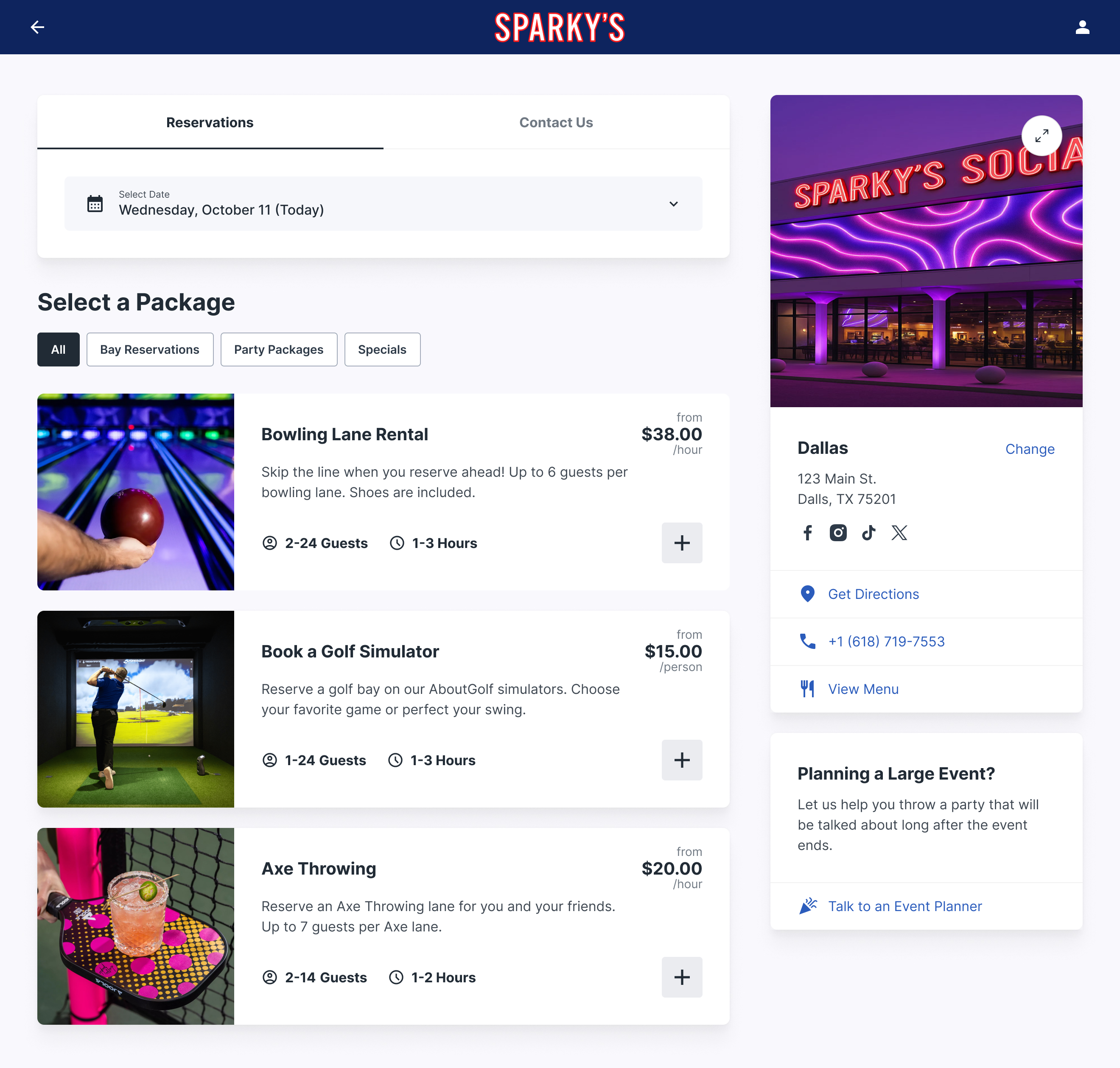
Rex makes weeknight promotion management faster. Creating a new package for Tuesday nights, running a time-limited promo code for your corporate outreach, or spinning up a league booking flow takes minutes instead of the hours it takes with most legacy booking systems. The faster you can launch a new weeknight initiative, the faster you can test it and scale what works.
Frequently Asked Questions
What's the most cost-effective strategy for filling slow weeknights at an entertainment venue?
Themed nights and recurring events have the highest ROI because they build habitual attendance with no ongoing per-guest cost. Once a themed night builds its regular audience, the attendees self-promote through social sharing and word of mouth. The initial setup cost — signage, a promotional email, a partner booking — is typically recovered within two or three sessions.
How do I fill a bowling alley on weekdays without discounting my weekend rates?
The key is to create weeknight packages with distinct names and feature bundles rather than simply reducing the rack rate. A 'Tuesday Unlimited' package with bundled F&B has a different psychological frame than 'bowling at a discount.' You're offering a different experience, not a marked-down version of the weekend product. Weekend guests don't feel like they overpaid because they didn't buy the same thing.
How long does it take to see results from a weeknight promotion strategy?
Urgency-based email and SMS campaigns to your existing guest list can drive bookings within 48–72 hours of deployment. Themed nights and leagues take four to eight weeks to build consistent attendance as guests establish the habit. Corporate outreach typically has a 30–60 day sales cycle from first contact to booked event. Plan for a 60-day window before drawing conclusions about any new weeknight initiative.
What's the best weeknight for entertainment venue promotions?
Thursday is typically the easiest weeknight to fill because guests are mentally transitioning into the weekend. Wednesday ("hump night") is the hardest and often the most valuable to crack — a venue that can make Wednesday a destination has a genuine competitive advantage. Tuesday is often the best night for leagues because the weekly commitment feels less burdensome mid-week than Monday and less competitive than Thursday.
How do I get corporate groups to book my venue for weeknight events?
Proactive outreach beats passive waiting. Build a simple corporate events package document with pricing, capacity, and what's included. Send it directly to HR managers and office managers at companies within a few miles of your venue. Offer a complimentary site visit for groups of 20 or more. Follow up within 24 hours of every inquiry. Most venues lose corporate bookings not because they lose on price or product, but because they're slow to respond.
Does Rex support weeknight-specific pricing and promotions?
Yes. Rex allows you to create time-specific pricing rules, promo codes, and custom packages that are only active during defined windows — like Tuesday through Thursday, 5–9pm. This means you can have a weeknight pricing structure running in parallel with your standard rates without any manual toggling. You can also create league booking flows and group packages that are bookable directly from your site.
Fill Your Slow Weeknights with Rex
Implementing weeknight strategies only works if your booking system can keep up. Creating a new themed night package, running a mid-week promo code, or launching a league registration flow should take minutes — not hours spent calling your software vendor.
Rex is built for entertainment venues that want to move fast. See how Rex handles weeknight programming, promotional pricing, and league bookings — and why operators across the US use it to turn slow weeknights into profitable ones.