
Entertainment venue staffing is the single biggest operational headache most operators face. Not the booking software. Not the marketing. The people.
If you run a bowling alley, FEC, golf simulator lounge, or any activity-based venue, you already know the cycle: hire someone, spend three weeks training them, watch them leave for a restaurant job that pays $2 more per hour. Repeat until you question every life decision that led you here.
This guide breaks down how to hire venue staff who actually stick around, train them so they stop breaking equipment and annoying customers, and build a retention system that doesn’t rely on hope. Whether you’re opening your first venue or managing 200+ seasonal employees across multiple locations, this is the playbook operators wish they had.
Why Entertainment Venue Staffing Is Different
Restaurants have staffing problems. Retail has staffing problems. But entertainment venues have a uniquely brutal version of the staffing problem because of three factors that stack on top of each other.
- Multi-skill requirements — A bowling lane attendant needs to reset pinsetters, troubleshoot scoring systems, handle shoe rentals, manage lane assignments, upsell party packages, and de-escalate the guy who threw a ball into lane 7. In a restaurant, your server takes orders and carries plates.
- Extreme demand volatility — A Tuesday afternoon might need 4 staff. A Saturday night needs 18. A birthday party weekend needs 25. No other industry swings this hard on a weekly basis.
- Equipment complexity — Your staff operates bowling pinsetters, golf simulators, laser tag systems, arcade machines, and go-karts — sometimes all in the same building. Breaking one piece of equipment can cost thousands.
- Seasonal surges — Summer, school breaks, and holidays can triple your traffic. You need to ramp up fast and ramp down without losing your core team.
The result: entertainment venues face 60–100% annual turnover in frontline roles, compared to about 75% for restaurants. The cost of replacing a single hourly employee ranges from $3,000–$5,000 when you factor in recruiting, training, and the productivity gap during onboarding.
Building Your Staffing Structure
Before you post a single job listing, you need to know what you’re building. Most venues make the mistake of hiring reactively — someone quits, you panic-hire their replacement. That’s not a staffing strategy, it’s a staffing emergency.
Define Your Roles Clearly
Every entertainment venue needs these core roles, though titles and exact responsibilities vary by venue type and size:
- Front desk / guest services — First point of contact. Handles check-in, shoe rental, waivers, basic questions. This person sets the tone for the entire visit.
- Activity attendants — Lane techs, simulator operators, course marshals, arena refs. They run the activities and troubleshoot equipment issues in real time.
- Party/event coordinators — Manage group bookings from setup through cleanup. Handle communication with the booking contact, coordinate timing, and upsell add-ons.
- F&B staff — If your venue serves food and drinks (and most do), you need servers, bartenders, kitchen staff, and someone managing orders.
- Shift leads / supervisors — Your on-the-ground management layer. They handle escalations, manage breaks, and make real-time staffing calls.
- General manager — Owns the P&L, hiring, scheduling, vendor relationships, and overall venue operations.
The mistake most operators make: blending too many roles into one position. Your front desk person should not also be running birthday parties and fixing the pinsetter. Role clarity reduces errors, speeds up training, and gives employees a clear growth path.
Calculate Your Staffing Ratios
Use these benchmarks as starting points, then adjust based on your venue’s actual traffic patterns:
- Front desk — 1 per 30–40 concurrent guests
- Activity attendants — 1 per 4–6 bowling lanes, 1 per 3–4 golf simulator bays, 1 per activity zone in an FEC
- Party coordinators — 1 per 2–3 simultaneous parties
- F&B — Follow standard restaurant ratios — 1 server per 15–20 guests, adjusted for counter-service vs. table-service
Track your actual guest-to-staff ratio weekly. If guest satisfaction scores drop when you dip below a certain ratio, that’s your floor — don’t go below it.
How to Hire Venue Staff Who Actually Want to Be There
The biggest hiring mistake in entertainment venues: treating it like restaurant hiring. You’re not looking for the same person. The best venue employees are part hospitality worker, part tech troubleshooter, part event coordinator, part chaos manager.
Where to Find Candidates
- Local colleges and trade schools — Students want flexible hours, social environments, and something more interesting than folding clothes at a retail store. Your venue offers all three.
- Indeed and local job boards — Still the highest-volume source for hourly roles. Write listings that sound human, not corporate.
- Employee referral programs — Your best employees know other good employees. Offer $100–$250 referral bonuses paid after 90 days. This consistently produces the longest-tenured hires.
- Social media — Post hiring content on your venue’s Instagram and TikTok. Show what working there actually looks like — the energy, the team, the perks. Gen Z applies to places that look fun.
- Poach from adjacent industries — Former hotel front desk staff, camp counselors, theme park employees, and event planners already have the multitasking and guest-facing skills you need.
What to Look For in Interviews
Skills can be taught. Personality cannot. Prioritize these traits over experience:
- Energy and enthusiasm — Entertainment is a vibe business. If someone can’t bring energy to an interview, they won’t bring it to a Saturday night shift.
- Problem-solving instinct — Ask scenario questions: ‘A family arrives for a birthday party and their reserved lane is down. What do you do?’ The right candidate improvises. The wrong one freezes.
- Reliability indicators — Ask about their longest-held previous job. Ask how they handled a time they had to cover for someone. Past reliability predicts future reliability.
- Technical curiosity — For activity attendant roles, someone who asks questions about how the equipment works during the interview is gold. They’ll learn faster and break things less.
Skip the traditional interview format for frontline roles. Instead, run a 2-hour working interview — pay them for it. Have them shadow a shift, interact with guests, and handle a few real situations. You’ll learn more in 2 hours of observation than in 30 minutes of questions.
Training That Actually Works
Most venue training is a disaster. It’s either a binder nobody reads, a video from 2019, or three days of following someone who’s also trying to do their own job. None of these work. Here’s what does.
The 5-Day Onboarding Framework
Day 1 — Orientation and culture
- Tour the entire venue — not just their station
- Introduce them to every team member on shift — by name
- Walk through the guest journey — from parking lot to checkout
- Cover safety protocols — emergency procedures and equipment basics
- Assign a buddy — an experienced employee who’s their go-to for the first two weeks
Days 2–3 — Station training
- Hands-on practice at their primary station — with their buddy watching
- Equipment operation — and basic troubleshooting
- POS system training — every transaction type they’ll handle
- Practice handling the 10 most common guest questions — role-play with their buddy
Day 4 — Cross-training exposure
- Spend 2 hours at each adjacent station — understand how their role connects to others
- Learn backup procedures — for when other stations need help
Day 5 — Solo shift with safety net
- Run their station independently — during a low-traffic period
- Buddy is nearby but not hovering — available for questions
- Debrief at end of shift — what went well, what needs more practice
Create a Training Playbook
Document everything in a simple, visual playbook that new hires can reference on their phone:
- Equipment quick-start guides — with photos showing button locations, common error codes, and reset procedures
- Guest interaction scripts — for the 10 most common scenarios (late arrivals, lane changes, complaint handling, upselling)
- Decision trees — for common problems (‘Guest says the simulator isn’t working’ → check power → restart software → call shift lead)
- Closing and opening checklists — station by station
The playbook isn’t a policy manual. It’s a quick-reference tool that prevents the ‘I didn’t know what to do’ excuse. Keep it under 20 pages. Update it monthly with real situations that came up.
Scheduling: The Make-or-Break Skill
Bad scheduling is the number one reason good employees quit entertainment venues. It’s not the pay — it’s finding out Sunday night that they work Monday morning, or watching the manager’s friend get every Friday off while they work every weekend for three months straight.
Scheduling Best Practices
- Post schedules 2 weeks out minimum — 7 days is too short. Your staff has lives, school, and second jobs. Two-week visibility reduces call-outs by 25–30%.
- Use scheduling software — When I Work, 7shifts, or Homebase. Not a whiteboard. Not a group text. Software handles availability, shift swaps, and overtime tracking automatically.
- Build shift tiers based on traffic data — Use your booking system data to identify peak and off-peak patterns, then build staffing templates for each tier.
- Rotate weekend shifts fairly — Create a visible rotation so everyone works their share of peak nights. Transparency kills resentment.
- Create an on-call pool for surge coverage — Pay a small premium ($2–3/hr on-call bonus) for employees willing to be available on high-traffic days.
If your venue experiences dramatic seasonal swings, read our guide on summer peak season prep strategies for a complete framework on ramping staff up and down without losing your core team.
How to Keep Your Best People
Hiring is expensive. Training is expensive. Losing a trained employee and starting over is the most expensive thing you do — you just don’t see it on a line item. Retention is where the real ROI lives.
Pay and Benefits
You don’t have to be the highest-paying employer in town. But you can’t be the lowest, either.
- Benchmark against local restaurants and retail — not other entertainment venues. Your competition for labor is Chili’s and Target, not the bowling alley across town.
- Implement 90-day raises — A $0.50–$1.00 raise at 90 days costs almost nothing compared to a $4,000 replacement. It signals that staying pays off.
- Tip sharing or service charges — If your venue has F&B, structure tips so everyone benefits — including activity attendants who enhance the overall experience.
- Perks that cost you nothing — Free bowling after shifts. 50% off food. Friends-and-family discounts. Free play on arcade games. These cost you pennies in marginal cost but feel like real compensation.
Culture and Growth
- Promote from within visibly — When a lane attendant becomes a shift lead, announce it to the whole team. Show that there’s a path up.
- Monthly team events — After-hours bowling tournaments, staff pizza nights, or team outings. Budget $200–$500/month — it pays for itself in reduced turnover.
- Ask for feedback and act on it — Run a 5-question anonymous survey quarterly. Ask: what’s working, what’s frustrating, what would you change? Then actually change one thing per quarter.
- Flexible scheduling for students — If 40% of your staff is in college, build schedules around exam periods. Losing your entire team every finals week is preventable.
Building a strong team also supports your membership program growth — members interact with your staff regularly, and consistent, friendly faces drive retention on both sides of the counter.
Using Technology to Reduce Staffing Pressure
You can’t hire your way out of a staffing shortage — at least not at a price that makes sense. The smarter move is reducing how many staff hours you need per guest served.
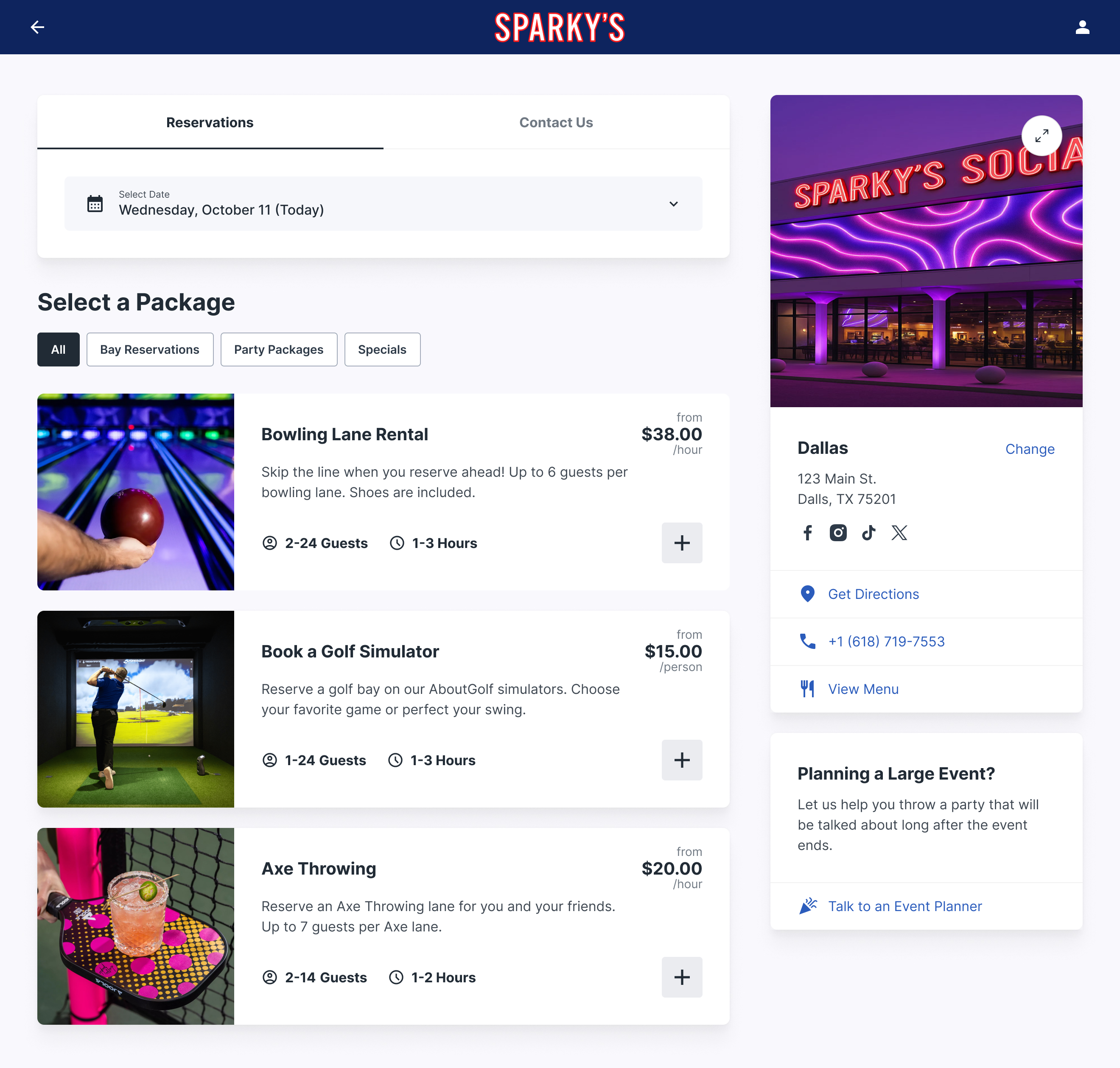
- Online booking and self-service check-in — When guests book online, select their lanes or bays, sign waivers digitally, and check in on a kiosk, your front desk goes from 3 people to 1. That’s 2 fewer positions to fill on every shift.
- Automated party booking — Let guests build and book their own party packages online — activities, food, decorations, timing — without calling or emailing your team. This eliminates hours of phone tag and back-and-forth.
- Digital event management — For corporate events and group bookings, use a platform that handles proposals, contracts, deposits, and communication in one place. Your event coordinator should manage events, not paperwork.
- Dynamic pricing that runs itself — Set rules once — higher prices on Friday nights, lower prices on Tuesday afternoons — and let the system adjust automatically. No staff member needed to manage pricing changes.
- Mobile ordering for F&B — QR code ordering from the lane or bay reduces server staffing needs by 30–40% while often increasing average check size because guests order more when there’s no waiting.
Our deep dive on dynamic pricing for entertainment venues covers the full strategy for implementing time-based and demand-based pricing at your venue.
Handling Seasonal Surges Without Burning Out Your Core Team
Entertainment venues live and die by seasons. Summer, holiday breaks, spring break — traffic can triple overnight. The operators who handle this well build their surge staffing plan months in advance.
- Start recruiting 6–8 weeks before your peak season — Not 2 weeks before. By then, every restaurant, pool, and summer camp has already hired the best candidates.
- Create a ‘seasonal’ role category — Clear expectations: this is a 3-month position with potential to convert to permanent. Some of your best full-time employees will come from seasonal hires who proved themselves.
- Simplify seasonal training — Your seasonal hires don’t need the full 5-day program. Build a 2-day fast track covering their specific station plus safety basics. Pair every seasonal hire with a year-round buddy.
- Stagger seasonal end dates — Don’t let all seasonal staff leave on the same day. Stagger end dates across 2–3 weeks so you have overlap during the transition back to regular staffing.
- Keep a boomerang list — Track your best seasonal employees and reach out 4–6 weeks before the next season starts. Returning seasonal staff need almost zero training.
Staffing Metrics Every Venue Operator Should Track
What gets measured gets managed. Track these monthly:
- Turnover rate — Total separations ÷ average headcount × 100. Benchmark: under 60% annually is strong for entertainment venues.
- Time to fill — Days from posting a job to the new hire’s first day. Target: under 14 days for hourly roles.
- Training completion rate — Percentage of new hires who complete the full onboarding program. If people are dropping out during training, your onboarding process has a problem.
- Revenue per labor hour — Total revenue ÷ total staff hours worked. This tells you if you’re overstaffed, understaffed, or balanced. Track it weekly and compare to your guest satisfaction scores.
- Guest satisfaction by shift — If your Sunday morning crew consistently gets lower ratings than your Saturday night crew, you have a training or staffing quality issue on Sundays — not a ‘Sunday problem.’
Pair your staffing metrics with a venue revenue audit to see how labor costs connect to your overall profitability picture.
Frequently Asked Questions
How many staff do I need per bowling lane?
Plan for 1 activity attendant per 4–6 lanes during peak hours, plus 1 front desk person per 30–40 concurrent guests. A 24-lane center on a busy Saturday night typically needs 4–5 lane attendants, 2 front desk staff, and 1 shift lead, plus F&B staff if applicable.
What’s a good starting wage for entertainment venue staff in 2026?
Benchmark against local restaurant and retail wages — not other venues. In most US markets, that means $14–$18/hour for entry-level positions, with shift leads at $18–$22/hour. Add a 90-day raise of $0.50–$1.00 to incentivize retention past the critical first three months.
How do I reduce no-shows for scheduled shifts?
Three strategies that work: post schedules 2 weeks out (not 1), use scheduling software that sends automatic reminders 12 hours before shifts, and implement a simple accountability system where repeated no-shows affect shift priority rather than resulting in immediate termination. Most no-shows are communication failures, not character flaws.
Should I hire full-time or part-time staff for my venue?
A mix of both. Your core team — shift leads, senior attendants, and your GM — should be full-time for consistency and institutional knowledge. Activity attendants and F&B staff work well as part-time roles, especially if you’re drawing from college students who want 20–30 hours per week with flexible scheduling.
How can technology help me run my venue with fewer staff?
Online booking with self-service check-in eliminates 1–2 front desk positions per shift. Self-serve party booking removes hours of phone coordination. QR-code mobile ordering reduces server needs by 30–40%. Dynamic pricing adjusts automatically without staff involvement. A good booking platform like Rex handles reservations, waivers, and payments without manual processing.
Build a Venue That Runs Smoothly — Starting with Better Systems
Great staff deserve great tools. When your booking, scheduling, and guest management systems work seamlessly, your team spends less time on admin and more time creating experiences that keep guests coming back. See how Rex helps entertainment venues streamline operations so your staff can focus on what they do best.