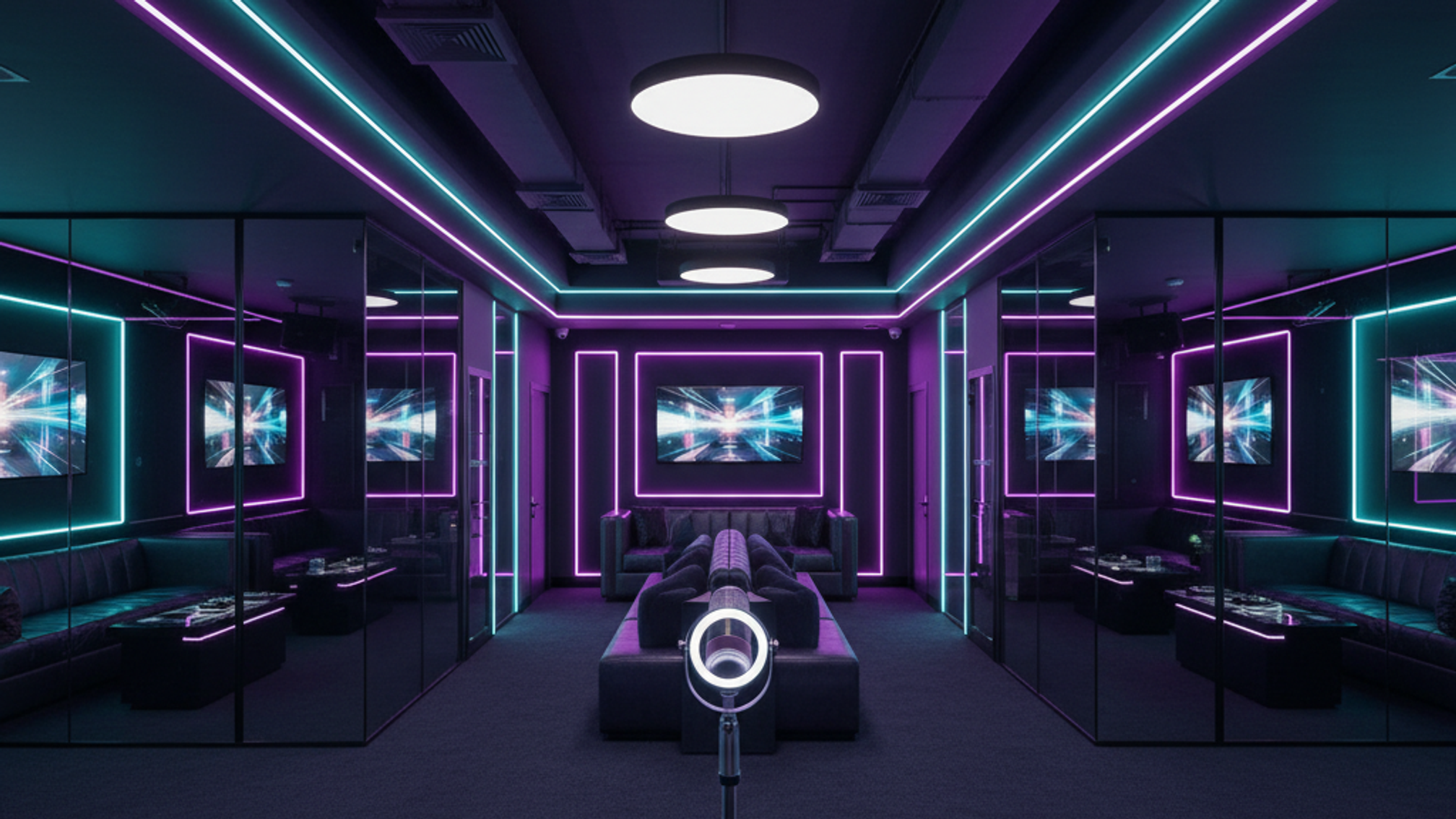
The karaoke business is booming. Private-room karaoke venues are popping up in every major metro, and the numbers back the hype — the global karaoke market hit $5.2 billion in 2025 and is projected to grow at 8% annually through 2030. If you've been thinking about how to start a karaoke business, the timing couldn't be better.
Unlike nightclubs that depend on bottle service or restaurants with razor-thin margins, karaoke lounges sell an experience with minimal cost of goods. A private room that costs you $15/hour to operate can generate $50–$150/hour in bookings — before drinks, food, or add-ons. That's the kind of math that makes investors (and bank loan officers) pay attention.
This guide covers everything: startup costs, location strategy, room design, licensing, technology, staffing, marketing, and revenue optimization. Whether you're planning a high-end private-room concept or a neighborhood karaoke bar, this is the operator's playbook.
Understanding the Karaoke Business Model
Before diving into logistics, understand what you're actually selling. Karaoke venues make money through three primary channels:
- Room rentals — Hourly rates for private rooms, your core revenue driver. Expect $30–$150/hour depending on room size and market
- Food and beverage — Most karaoke venues generate 40–60% of total revenue from F&B. Cocktails with high margins are the sweet spot
- Events and packages — Birthday parties, corporate team building, bachelorette parties. These are your highest-revenue bookings at $500–$5,000+ per event
The private-room model dominates in 2026. Open-floor karaoke bars still exist, but private rooms command higher prices, attract broader demographics, and generate more predictable revenue. A 10-room venue with strong utilization can generate $500,000–$1.2 million annually.
How Much Does It Cost to Open a Karaoke Business?
Plan for $150,000–$500,000 in total startup costs, depending on your concept, location, and whether you're building from scratch or converting existing space.
- Lease and buildout — $50,000–$200,000. This is typically your biggest expense. Soundproofing alone can run $5,000–$15,000 per room
- Karaoke systems and AV equipment — $3,000–$8,000 per room. Commercial-grade systems from providers like Singing Machine, KaraFun, or Singa
- Furniture and décor — $20,000–$60,000. Seating, lighting, themed décor. The Instagram factor matters — invest in atmosphere
- Liquor license — $5,000–$50,000+ depending on your state and municipality. Some states like New Jersey can exceed $100,000
- POS and booking technology — $2,000–$10,000 for setup plus monthly fees. You need a system that handles hourly room reservations, not just table bookings
- Initial inventory (F&B) — $10,000–$25,000 for opening stock
- Working capital — $30,000–$75,000 for 3–6 months of operating expenses before you reach profitability
Total range: $150,000–$500,000. A lean conversion of existing bar space can come in under $200,000. A ground-up build with 12+ rooms in a premium market will push past $400,000.
Choosing the Right Location
Location makes or breaks a karaoke business. You need a spot that balances foot traffic, parking, and buildout feasibility.
What to Look For
- 3,000–8,000 sq ft — Enough for 8–15 private rooms plus a bar/lounge area, restrooms, and a small kitchen if you're serving food
- Entertainment or mixed-use zoning — Verify that your zoning allows late-night entertainment, amplified music, and liquor service before signing a lease
- Proximity to nightlife and dining — Karaoke is an evening and weekend business. Being near restaurants and bars creates natural walk-in traffic
- Adequate parking — Groups of 6–12 people arriving together need parking. If street parking is limited, ensure a nearby lot or garage
- Sound isolation potential — Concrete or brick walls between units are ideal. Shared walls with residential tenants will create constant noise complaints
Urban markets with strong nightlife — Miami, Austin, Nashville, Los Angeles, New York, Chicago — are proven karaoke markets. But don't sleep on suburban entertainment districts. A karaoke lounge near a movie theater and restaurant cluster can do excellent business without downtown rent.
Room Design and Soundproofing
Your rooms are the product. Get them right.
Room Sizes and Capacity
- Small rooms (4–6 people) — 80–120 sq ft. Your bread and butter for date nights and small friend groups
- Medium rooms (8–12 people) — 150–200 sq ft. Most popular for birthday parties and casual groups
- Large rooms (15–25 people) — 250–400 sq ft. Corporate events, large parties, bachelorette groups. Fewer of these, but they command premium rates
- VIP suite (25–40 people) — 400–600 sq ft. One per venue. Your anchor for high-revenue events
A balanced mix: 3–4 small, 4–5 medium, 2–3 large, and one VIP suite gives you flexibility to serve any group size.
Soundproofing Is Non-Negotiable
Amateur hour is when karaoke venues skip proper soundproofing. Sound bleed between rooms ruins the private experience and generates noise complaints. Budget $5,000–$15,000 per room for:
- Double-layer drywall with Green Glue damping compound between layers
- Solid-core doors with perimeter seals and automatic door bottoms
- Acoustic panels on walls and ceiling for internal sound quality (not just isolation)
- Floating floors or resilient channel systems to prevent bass transmission
- HVAC isolation — ductwork transfers sound. Use lined ducts or separate mini-splits per room
Karaoke Equipment and Technology
Technology Stack
Every room needs:
- Commercial karaoke system — Cloud-based platforms like Singa or KaraFun Business offer 80,000+ songs with automatic licensing. Expect $100–$300/month per room
- Display — 55–75" TV or projector with screen. Larger rooms benefit from dual screens so everyone can see lyrics
- Sound system — Powered speakers, subwoofer, and mixer. Budget $1,500–$4,000 per room for quality gear that handles nightly use
- Microphones — Wireless mics (2–4 per room). Buy quality — Shure or Sennheiser wireless systems last longer and sound better than cheap alternatives
- Lighting — LED color-changing lights, disco balls, or laser systems. Lighting transforms the experience from "conference room with a TV" to "this is amazing"
- Tablet or touchscreen controller — For song selection and queue management. Wall-mounted iPads are the standard
Booking and Operations Technology
You need a reservation system built for hourly resource booking, not restaurant-style table management. Your system should handle online reservations with real-time room availability, dynamic pricing for peak vs. off-peak hours, party and event package booking with deposits, and automated reminders to reduce no-shows.
Platforms like Rex are purpose-built for activity-based venues — handling hourly room bookings, party packages, memberships, and multi-resource scheduling out of the box. That's a better fit than adapting a restaurant reservation tool that thinks in table turns instead of hourly time slots.
Licensing and Legal Requirements
Karaoke venues sit at the intersection of entertainment, food service, and music licensing. You'll need:
- Business license and EIN — Standard for any business. File your LLC or corporation first
- Liquor license — The most complex and expensive permit. Start this process 3–6 months before your target opening date. Requirements vary wildly by state and municipality
- Music licensing — If you're using a commercial karaoke platform (Singa, KaraFun), licensing is included in your subscription. If you're building a custom song library, you'll need blanket licenses from ASCAP, BMI, and SESAC
- Food service permits — Health department inspection, food handler certifications for staff
- Certificate of occupancy — Especially important after buildout. Your max room capacities depend on this
- Entertainment permit — Some municipalities require a separate permit for amplified music venues
- Fire marshal inspection — Required before opening. Ensure each room has proper egress, sprinklers, and occupancy signage
Pro tip: hire a local attorney who specializes in hospitality or entertainment venues. The liquor license process alone justifies the cost.
Staffing Your Karaoke Venue
Karaoke venues run lean compared to full-service restaurants. A typical 10-room venue needs:
- General manager — 1 full-time. Oversees operations, handles scheduling, manages vendor relationships
- Bartenders — 2–3 per shift. They're your highest-revenue staff. Hire people who can pour fast and upsell naturally
- Room attendants/hosts — 2–3 per shift. They greet guests, set up rooms, troubleshoot equipment, and handle room turnover between bookings
- Kitchen staff — 1–2 per shift if serving food. Many karaoke venues keep menus simple (shareable plates, appetizers) to minimize kitchen complexity
- Sound/tech person — 1 part-time or on-call. For equipment maintenance and troubleshooting. Can be a room attendant with tech skills
Total headcount: 8–15 employees depending on hours and concept. Labor should run 25–35% of revenue.
Maximizing Revenue at Your Karaoke Venue
The difference between a karaoke venue that survives and one that thrives comes down to revenue per room per hour. Here's how to push that number up.
Dynamic Pricing
Not every hour is worth the same. Price accordingly:
- Peak hours (Fri–Sat 8pm–1am) — Premium rates. $60–$150/hour depending on room size and market
- Shoulder hours (Thu, Sun evenings) — Standard rates. 10–20% below peak
- Off-peak (weekday afternoons, early evenings) — Discounted rates or happy hour packages to drive utilization. A room earning $30/hour is better than an empty room
Read our deep dive on dynamic pricing for entertainment venues to learn how operators like Atomic Golf used pricing flexibility to 10x bookings.
Party and Event Packages
Packages are your highest-margin revenue stream. A birthday party package at $500–$1,500 (room rental + food + drinks + decorations) is far more profitable than selling the same room hourly. Build packages for:
- Birthday parties — The bread and butter. Include room time, a drink package, and a food platter
- Corporate team building — Companies pay premium rates and book during off-peak hours (weekday afternoons). Win-win
- Bachelorette and bachelor parties — Add VIP touches: champagne, custom playlists, themed decorations
- Holiday events — New Year's Eve, Halloween, and holiday party season are peak booking windows
For more on building event packages that sell, check out our guide to building party packages for entertainment venues.
Memberships
Membership programs create predictable recurring revenue and fill off-peak hours. A typical karaoke membership might offer:
- $49–$99/month for a set number of included hours (2–4 per month)
- Priority booking during peak hours
- 10–15% discount on food and drinks
- Free room upgrades when available
Learn how other venues are building membership programs in our membership guide for entertainment venues.
Food and Beverage Strategy
F&B should generate 40–60% of your total revenue. Keep these principles in mind:
- Shareable over individual — Groups order platters, not entrées. Design your menu around sharing: wings, sliders, nachos, spring rolls
- Signature cocktails — Create themed drinks with high margins. A "Mic Drop Margarita" at $14 with $2 in ingredients is good business
- In-room ordering — QR codes or tablet ordering in each room. The easier it is to order, the more they spend
- Bottle service for VIP rooms — Premium markup on bottles of champagne, whiskey, or vodka. Groups celebrating will pay it
Marketing Your Karaoke Business
Karaoke is inherently shareable. Lean into that.
Before Opening
- Instagram and TikTok presence — Start posting buildout progress 3–4 months before opening. Behind-the-scenes content builds anticipation
- Google Business Profile — Claim and optimize immediately. "Karaoke near me" searches spike on Friday and Saturday afternoons
- Soft launch events — Invite local influencers, food bloggers, and event planners for a preview night. Their posts become your first wave of marketing
Ongoing
- User-generated content — Encourage guests to post videos and tag your venue. Consider a branded hashtag and photo-worthy room designs
- Google Ads — Bid on "karaoke [city name]" and "private karaoke rooms near me." These searches have high commercial intent
- Partnership with bars and restaurants — Cross-promote with nearby venues. "Dinner at [restaurant], karaoke at [your venue]" packages
- Corporate outreach — Directly contact local HR departments and event planners. Corporate bookings fill weekday gaps
- Email and SMS marketing — Build your list from day one. Send weekly specials, new song announcements, and event reminders
For reducing no-shows (a real problem with group bookings), read our guide on avoiding cancellations and no-shows at your venue.
Common Mistakes to Avoid
- Skimping on soundproofing — This is the #1 complaint at poorly built karaoke venues. Fix it during buildout, not after opening
- Overcomplicating the menu — You're not a restaurant. Keep the kitchen simple and focus on high-margin shareable items
- Ignoring off-peak hours — Empty rooms during the week destroy profitability. Build programs (corporate events, happy hours, memberships) specifically for slow periods
- Using restaurant booking software — Table management tools don't understand hourly room rentals, buffer times between bookings, or activity-based pricing. Use a platform designed for entertainment venues
- Neglecting equipment maintenance — A broken mic or glitchy screen during someone's birthday party earns you a one-star review. Schedule weekly equipment checks
Your 12-Month Launch Timeline
- Months 1–2 — Business plan, entity formation, secure financing, begin location scouting
- Months 3–4 — Sign lease, hire architect/contractor, begin liquor license application, select karaoke system vendor
- Months 5–7 — Buildout and soundproofing, equipment procurement, hire GM and begin staff recruitment
- Months 8–9 — Equipment installation, staff training, menu development, booking system setup, pre-opening marketing begins
- Month 10 — Soft launch with invited guests, refine operations, collect feedback
- Months 11–12 — Grand opening, full marketing push, begin optimizing pricing and operations based on real data
Frequently Asked Questions
How profitable is a karaoke business?
A well-run 10-room karaoke venue can generate $500,000–$1.2 million in annual revenue with profit margins of 15–25% after stabilization. Room rentals typically carry 70–80% margins, while F&B adds volume at 65–75% margins. Most venues reach profitability within 12–18 months of opening.
Do I need a liquor license for a karaoke business?
If you plan to serve alcohol (and you should — F&B generates 40–60% of total revenue), yes. The type and cost varies dramatically by state: $5,000 in some states, over $100,000 in others. Start the application 3–6 months before your planned opening. Some venues open as BYOB while awaiting their license.
What karaoke system should I use?
Cloud-based commercial systems like Singa, KaraFun Business, or Sunfly are the standard for professional karaoke venues in 2026. They offer 80,000+ licensed songs, automatic updates, and legal music licensing included in the subscription. Expect $100–$300/month per room. Avoid consumer-grade karaoke machines — they can't handle nightly commercial use.
How many rooms does a karaoke venue need to be profitable?
Most operators find the sweet spot is 8–15 rooms. Fewer than 6 rooms makes it hard to cover fixed costs (rent, staff, licensing). More than 20 rooms requires significantly more staff and a larger space, which can push startup costs past $500,000. Start with 8–12 rooms and expand if demand supports it.
Can I open a karaoke business with no experience in hospitality?
Yes, but hire experienced people. A GM with bar or entertainment venue experience is essential. The karaoke-specific parts (equipment, song systems) are learnable, but managing staff, inventory, liquor compliance, and guest experience requires hospitality know-how. Many successful karaoke venue owners come from outside the industry but surround themselves with experienced operators.
Open Your Karaoke Venue with the Right Technology
The best karaoke venues run on systems built for activity-based entertainment — not adapted restaurant tools. Rex handles hourly room bookings, party packages, memberships, dynamic pricing, and integrations with your POS — all from one platform. Whether you're opening your first venue or scaling to multiple locations, Rex gives you the operational backbone to focus on what matters: creating an experience guests can't stop talking about.
Book a free demo and see how Rex can power your karaoke business from day one.