Most advice about increasing bowling alley revenue sounds the same: run cosmic bowling nights, sell more food, host birthday parties.
You already know that. You've probably tried most of it. The question isn't *what* to do — it's what actually moves the needle in 2026, when guests expect to book everything from their phone and your competition is adding golf simulators and axe throwing next door.
We work with hundreds of entertainment venues — bowling centers, FECs, multi-activity complexes — and we see their booking data every day. Here's what's actually driving revenue growth for the ones that are winning.
1. Let guests book and pay online — and stop thinking of it as optional
This isn't a "nice to have" anymore. Venues that add online booking see an average 30-40% increase in reservations within the first 90 days. Why? Because 60% of bookings happen outside business hours, when nobody's picking up the phone.
Every missed call is a missed booking. And most callers don't leave a voicemail — they just book somewhere else.
What the top venues do differently:
- They don't just list a phone number on their website. The booking page IS the website.
- They embed booking directly into Google Business Profile (Reserve with Google integration).
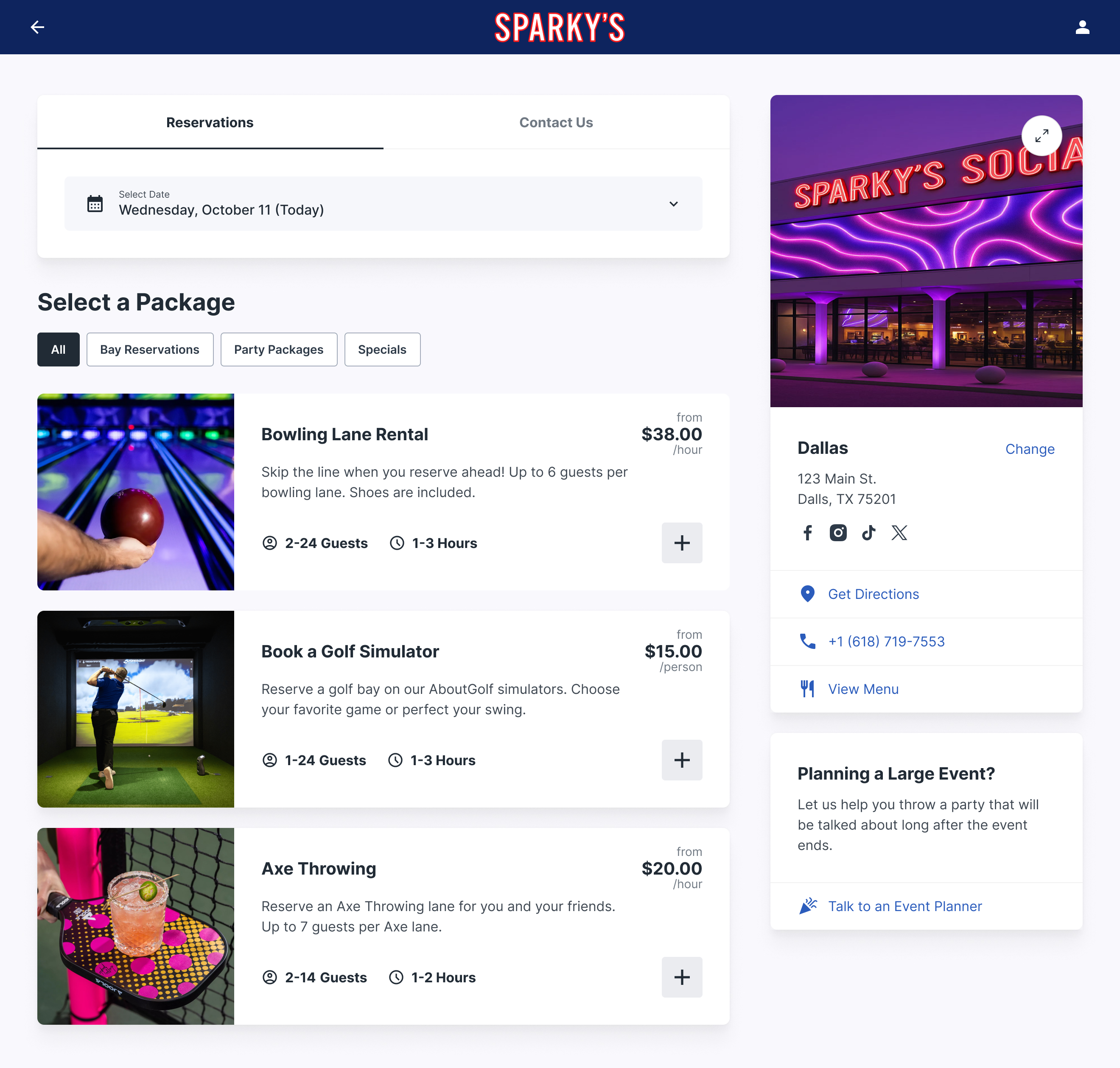
- They make lane selection, shoe add-ons, and F&B packages part of one checkout flow — not three separate steps.
The friction point isn't whether guests want to book online. It's whether your booking flow is fast enough to capture them before they bounce.
2. Price by demand, not by the hour
Most bowling centers charge flat rates — $5/game or $35/hour regardless of when you play. The ones growing revenue fastest are using dynamic pricing: higher rates on Friday and Saturday nights, lower rates on Tuesday afternoons.
This isn't about squeezing customers. It's about matching price to demand:
- Peak hours (Fri-Sat evening): You're turning people away anyway. Raising prices by 20-30% doesn't reduce demand — it captures revenue you were leaving on the table.
- Off-peak hours (weekday afternoons): Drop prices 15-20% and market it as a deal. You're filling lanes that would otherwise sit empty. Any revenue is better than zero.
One of our customers tested 9 different pricing packages over 6 weeks. They settled on 3 — and went from $2,000/day to $30,000/day in online bookings. The packages themselves weren't magic. The ability to test quickly was.
3. Turn your party booking process into a revenue engine
Birthday parties and group events are the highest-margin activity in most bowling centers. But many venues still require a phone call to book one. That's a conversion killer.
The venues driving the most party revenue have:
- Online party packages with clear pricing, add-ons, and availability — no "call for quote"
- Automated deposits collected at booking (reduces no-shows by 60-80%)
- Upsell flows built into the booking process: "Add a pizza package for $8/kid" converts at 40%+ when it's a one-click option
If you're using Tripleseat for event management, make sure it's synced with your booking system so party inventory doesn't conflict with walk-in lane availability. Double-booking parties is the fastest way to lose a customer permanently.
4. Build recurring revenue with memberships
Memberships aren't just for gyms. Bowling centers that offer monthly membership plans see 2-3x higher visit frequency from members vs. casual guests — and they prepay, which stabilizes your cash flow.
What works:
- $29-49/month for unlimited bowling during off-peak hours
- Member-only perks: shoe rental included, 15% off F&B, priority lane reservations
- Family plans at $79-99/month (this is where the real money is)
The key insight: memberships don't just generate recurring revenue. They change behavior. Members visit more often, spend more per visit on food and drinks, and bring friends who pay full price.
5. Add bookable activities beyond bowling
The fastest-growing bowling centers aren't just bowling centers anymore. They're multi-activity venues with axe throwing, golf simulators, karaoke rooms, VR, and arcade areas.
Why this matters for revenue:
- Higher average spend per group: A group booking bowling + axe throwing spends 70-100% more than bowling alone
- Broader appeal: The person in the group who doesn't want to bowl now has something to do
- More reasons to visit: Bowling-only venues get 2-3 visits/year from casual guests. Multi-activity venues get 5-8.
You don't need to add everything at once. Start with one additional activity that fits your space and audience. Golf simulators have the highest ROI per square foot for most bowling centers adding a new activity.
6. Stop ignoring your existing customer data
You have a goldmine of data if you're collecting it: who books, when they book, what they spend, how often they return. Most venues aren't using any of it.
Quick wins from customer data:
- Lapsed customer campaigns: Email everyone who hasn't visited in 90 days with a $10 off offer. These reactivation campaigns typically convert at 8-12% — far higher than cold marketing.
- Birthday automation: If you capture birth dates at booking, send automated birthday party offers 6 weeks before their kid's birthday. This is the highest-converting email you can send.
- Post-visit follow-up: 24 hours after a visit, send a "rate your experience" email with a rebook CTA. The window when someone just had a good time is when they're most likely to book again.
7. Optimize your Google Business Profile (it's free revenue)
Your Google Business Profile is likely your #1 source of new customers — and most bowling centers barely maintain it.
What the top-performing venues do:
- Post weekly updates (specials, events, new activities)
- Respond to every review within 24 hours (Google rewards this with higher visibility)
- Enable Reserve with Google so guests can book directly from search results
- Add high-quality photos monthly (venues with 100+ photos get 520% more calls than those with fewer than 10)
This is free. It takes 30 minutes/week. And it directly drives bookings.
8. Package experiences, not just time
The shift from "rent a lane for an hour" to "book an experience" is the single biggest revenue lever most bowling centers haven't pulled.
Experiences command premium pricing:
- "2 hours of bowling" = $60
- "Strike Night Out: 2 hours of bowling + shoe rental + pitcher of beer + loaded nachos platter" = $120
Same lanes. Same time slot. Double the revenue. The packaging creates perceived value that hourly rates can't match.
The venues growing fastest are creating 3-5 signature packages — not 15. Too many choices paralyze guests. Give them a Good/Better/Best structure and most will pick the middle option.
---
The bottom line
Revenue growth at bowling centers isn't about one silver bullet. It's about stacking small improvements across your entire operation: online booking captures the guests you're currently losing, dynamic pricing optimizes what you earn from each one, parties and memberships build recurring revenue, and multi-activity programming gives people more reasons to come back.
The venues growing fastest in 2026 all have one thing in common: they made it easy for guests to book, spend, and return — without requiring a phone call, a PDF menu, or a "call for quote" form.
Ready to see how Rex helps entertainment venues increase revenue? Book a demo →
---
Rex powers online reservations for entertainment venues across the country — from bowling centers and golf simulators to axe throwing, pickleball, and multi-activity FECs.
Related Articles
• How to Start a Bowling Alley: A Complete Business Guide for 2026
• Why Rex Is the Go-To Bowling Reservation System for Your Center
• How to Increase Revenue Per Guest Without Raising Prices
• 6 Tips for Avoiding Cancelations and No-Shows at Your Center
• Rex has partnered with Steltronic Automatic Scoring Systems