A leisure sport is a physical activity played mainly for fun and social time rather than for competition, conditioning, or a result that counts toward anything. Bowling, pickleball, mini golf, axe throwing, darts, and padel all qualify: anyone can play on their first visit, the game is built for a group, and the score matters only to the people standing around the lane. For venue operators, this is the category that fills a room on a Tuesday afternoon and a Friday night using the same equipment.
What is a leisure sport?
Four traits separate a leisure sport from a traditional one. An activity needs all four, not just one of them.
- A low skill floor. A first-timer can play a full round without a lesson. There is still a ceiling for anyone who wants one, but nobody is put off in the first ten minutes.
- Group-first design. The unit of play is a lane, a bay, a court, or a room, sized for roughly two to ten people. Solo play is possible but it is not what the format is built for.
- A low physical barrier. A mixed group of ages and fitness levels can all take part in the same game without anyone sitting out.
- Casual competition. Scores are kept, but there is no referee, no league table you have to join, and nothing riding on the result.
Take any one of those away and you have something else. League tennis has a skill floor problem. A gym has no group format. A spectator sport removes participation entirely, and participation is the trait that makes the rest of the category work commercially.
What is the difference between sports and leisure?
"Sport" and "leisure" get used as a single phrase, and that hides a distinction worth keeping. Sport describes the activity: a game with rules and a way to win. Leisure describes the reason someone is doing it, which is discretionary time they chose to spend this way instead of another.
A leisure sport sits where the two overlap. It has the structure of a sport and the motivation of leisure. That combination is why the same activity can be sold as a birthday party, a corporate outing, and a weeknight date without changing anything about the game itself. It is also why these venues sit closer to hospitality than to athletics, and why competitive socializing became the industry term for the businesses built around them.
What are examples of leisure sports?
The commercially proven ones share the same DNA: quick to learn, better with other people, and repeatable enough that guests come back.
| Activity | How it is played | What the venue sells |
|---|---|---|
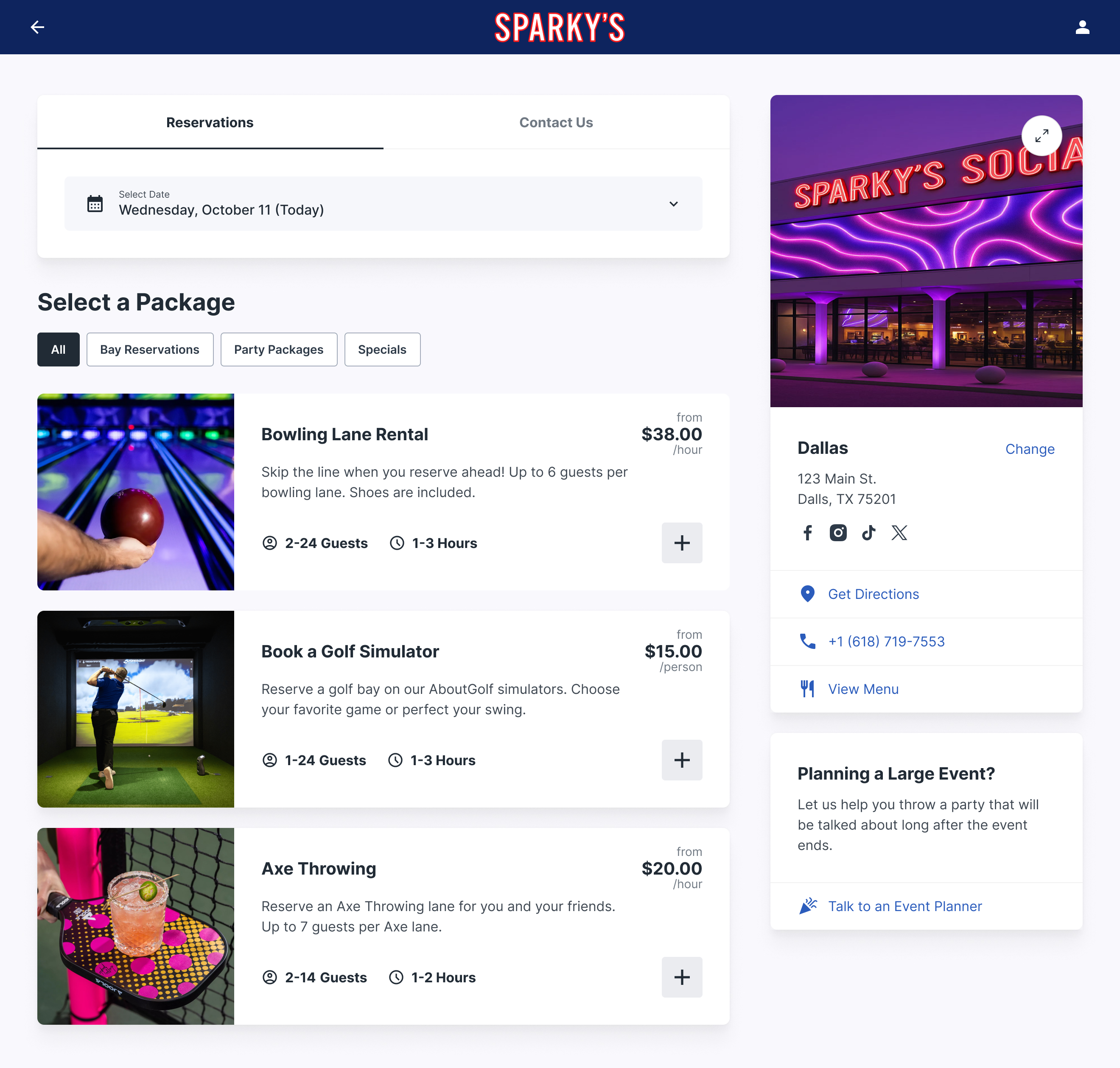
| Bowling | Ten-pin, duckpin, and boutique glow formats | The lane, by the hour or by the game |
| Mini golf | A themed course, indoors or outdoors | The round, per person |
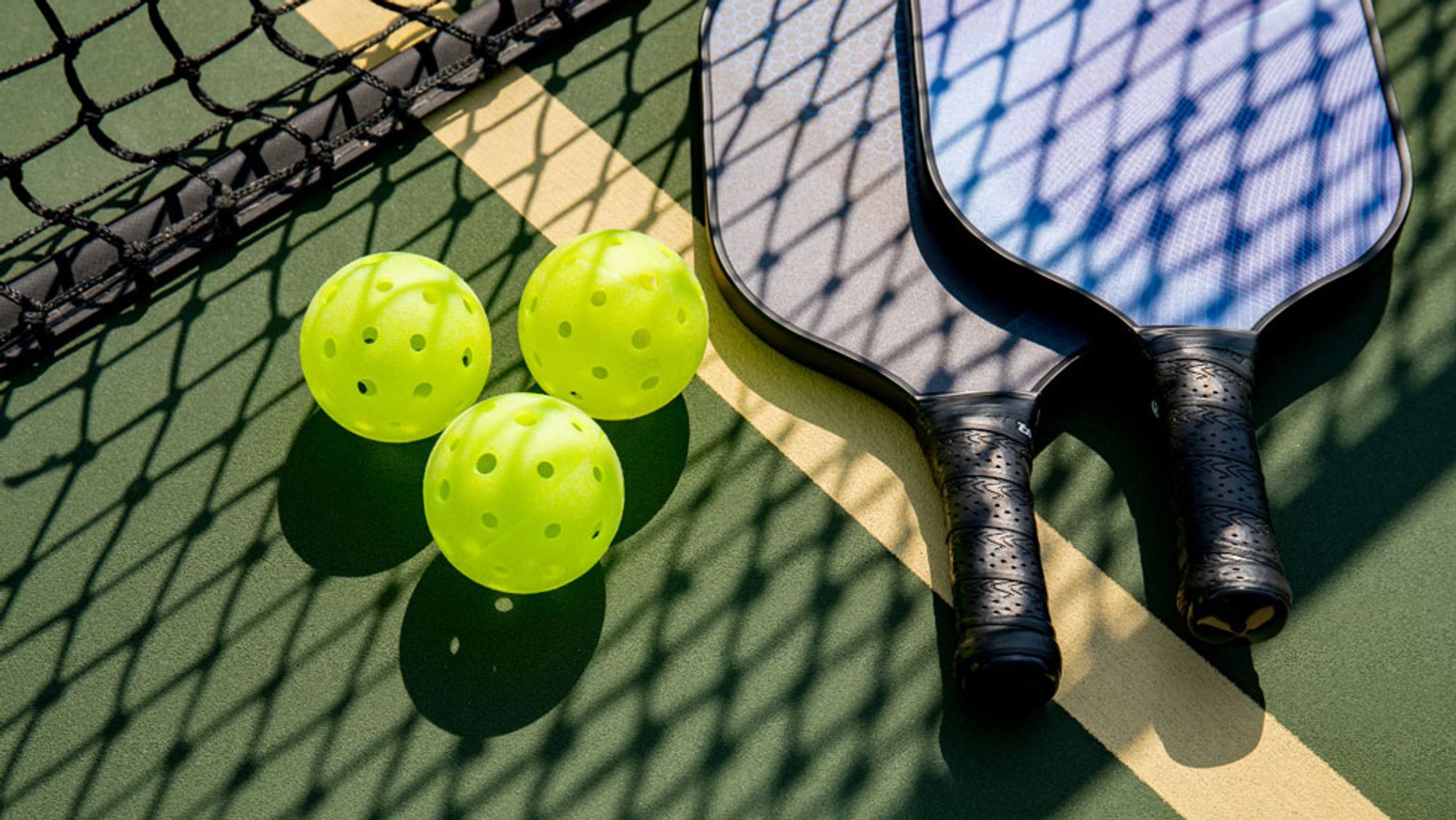
| Pickleball | Paddle sport on a small court, doubles by default | The court, by the hour |
| Padel | Tennis and squash hybrid on an enclosed court | The court, by the hour |
| Axe throwing | Coached target throwing in a partitioned bay | The bay, by the session |
| Darts | Traditional boards or screen-tracked social formats | The oche or booth, by the hour |
| Billiards | Pool and snooker on tables in an open room | The table, by the hour |
| Karaoke | Private rooms with a song catalog | The room, by the hour |
| Shuffleboard and bocce | Bar-length tables or short lanes | The table or lane, by the hour |
| Table tennis | Social ping-pong clubs and bar formats | The table, by the hour |
The last column is the part that matters. Leisure sports are sold as time on a fixed physical asset. A venue does not have unlimited inventory, it has twelve lanes or six bays or four courts, and the business is won or lost on how much of that inventory ends up booked.
Which leisure sports are growing fastest?
Participation across the whole category is at a record. The Sports and Fitness Industry Association found that 250 million Americans took part in at least one sport, fitness, or leisure activity during 2025, with 158.8 million of them taking part regularly.
Within that, a few formats are moving much faster than the rest:
- Pickleball reached 24.3 million US players in 2025, up from roughly 4.2 million in 2020. That is 479% growth in five years, and it has been the country's fastest-growing sport for five years running.
- Padel has passed 35 million amateur players worldwide across more than 150 countries, which makes it the fastest-spreading racket format outside the US.
- Bowling is still the largest by volume. 67 million Americans bowl at least once a year, and it remains the number one participation sport in the country.
Notice the different shapes there. Pickleball and padel are growth stories, bowling is a scale story, and an operator running more than one format is not betting the venue on a single trend holding up.
Why do operators build businesses around leisure sports?
Three reasons, and none of them is that the activity is fashionable.
One asset serves several markets. A bank of axe throwing bays is a bachelorette party on Saturday, a corporate team event on Tuesday, and a walk-in date night on Thursday. A restaurant has to change its menu or its room to do that. A leisure sports venue changes only the booking.
Guests stay longer and spend while they are there. Participation sets a natural session length, an hour on a court or a lane, and a group committed to being on site for an hour orders food and drinks. That is why so many of these concepts are built as eatertainment rather than as bare activity rooms.
Repeat visits are structural rather than promotional. A game with a score invites a rematch. That is the mechanism underneath leagues, memberships, and standing weekly bookings, and it is a far cheaper source of demand than acquiring a new guest every week.
What does it take to run a leisure sports venue?
The activity is the easy part. The operating problem is almost always the same one: selling a fixed number of time slots on a fixed number of lanes, bays, courts, or rooms, without double-booking any of them and without leaving them empty.
That puts a short list of things on the critical path:
- Real-time online availability. If a guest cannot see what is genuinely free at 7pm on Friday, they call instead, or they do not book at all.
- Deposits or prepayment on group bookings. A no-show on a 90-minute bay booked for eight people is not a small loss, and it is the most expensive routine failure in the category.
- Multi-activity bookings. Guests increasingly want a mix, an hour of bowling and then a table, which is a different problem from one activity in one slot.
- Add-ons attached to the reservation. Food, rentals, and party packages sold at the moment of booking rather than at the counter.
- Memberships and leagues. The mechanism that turns the rematch instinct into recurring revenue.
Rex is reservation and venue-management software built for entertainment and competitive socializing venues, including bowling, pickleball, mini golf and putting, axe throwing, karaoke, golf simulators, driving ranges, go-karts, escape rooms, family entertainment centers, and eatertainment. It covers online booking pages with real-time availability, deposits or full prepayment, multi-activity reservations, add-ons priced per guest or per booking, dynamic and time-slot pricing, a waitlist that notifies guests when slots open, memberships and leagues, and a host app for floor management and walk-ins.
If you are opening a venue around one of these activities rather than running one already, the guides on starting a pickleball business and opening a padel club go through the numbers in detail.
Book a demo to see how Rex handles your lanes, bays, or courts.
Frequently Asked Questions
Are leisure sports and recreational sports the same thing?
They overlap heavily and most people use the terms interchangeably. "Recreational sports" is the broader label and includes solo activities like running or lap swimming that nobody plays in a group. "Leisure sports" in a commercial context almost always means the social, group-booked, venue-based subset: bowling, pickleball, axe throwing, mini golf, darts, and the rest.
What counts as the sports and leisure industry?
It is the part of the economy built around discretionary physical activity, spanning participation venues, equipment and apparel, coaching and clubs, and the software and services those venues run on. Operators usually mean something narrower when they say it, namely the venue side: places that sell time on a lane, court, bay, or table. That narrower slice is the one growing fastest, because it converts participation into a booking rather than into a product sale.
Do you have to book a leisure sports venue in advance?
For peak hours, effectively yes. Friday evenings and Saturday afternoons at a well-run venue are booked out days ahead, and larger groups often need to reserve further out than that because the venue has to hold several adjacent lanes or bays. Walk-in capacity usually exists at off-peak times. If a venue near you does not offer online booking at all, it is very likely turning away demand it never sees.
Are leisure sports a good business to start?
They can be, and the case rests on the asset serving several markets rather than on any one activity staying popular. The main risks are the ones common to physical venues: lease cost against the square footage these formats need, up-front capital for equipment and build-out, and sensitivity to a single activity going out of fashion. Multi-activity venues tend to hold up better than single-activity ones for exactly that reason.