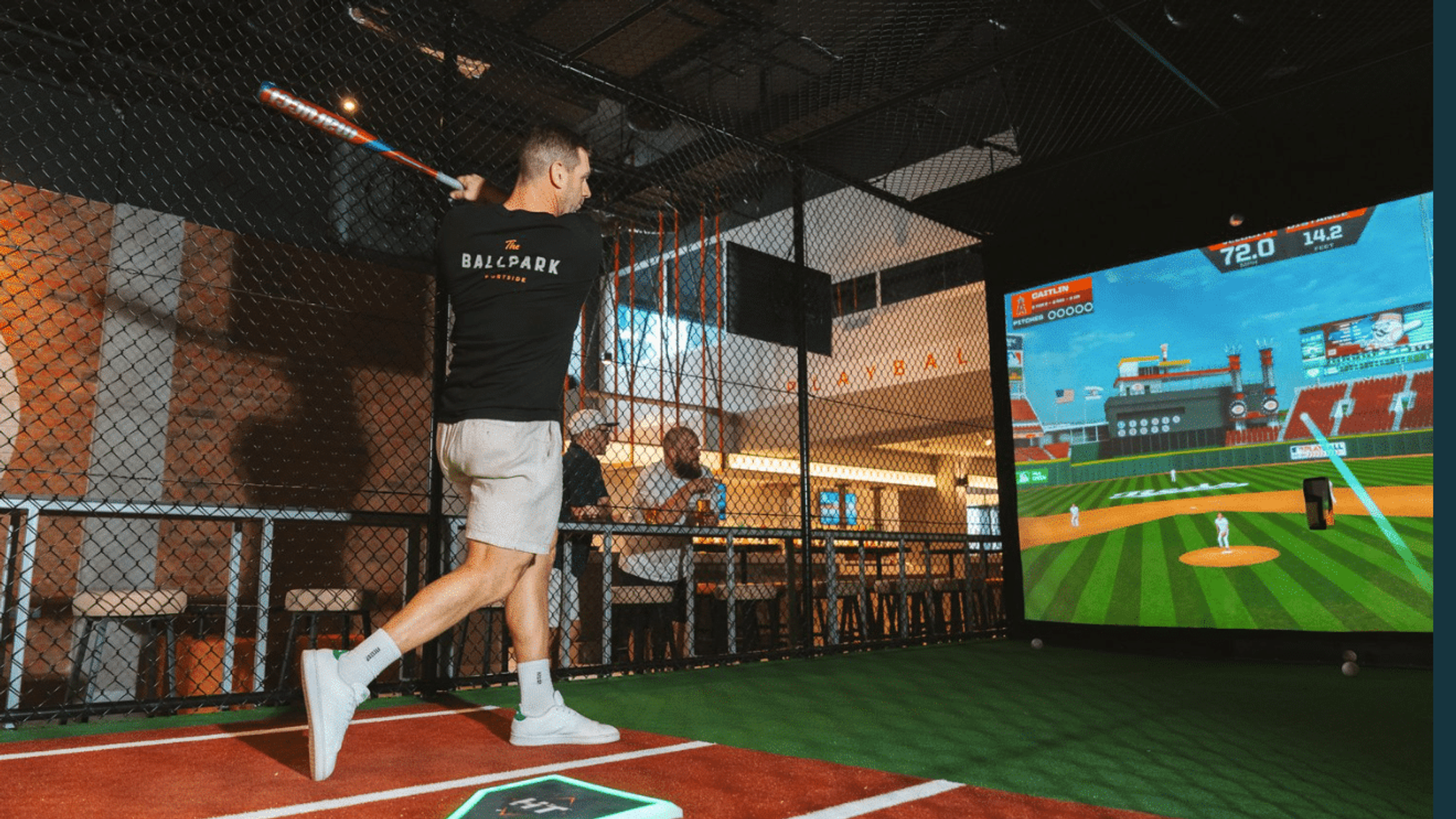
The batting cage business is having a moment. What was once a niche training amenity — the kind of thing tucked behind a strip mall or attached to a regional sports complex — has evolved into a standalone business category. Modern batting cage facilities serve three distinct markets at once: youth athletes and travel teams, adult recreational leagues, and group entertainment seekers who want something more active than axe throwing or bowling. That three-way overlap is what makes the batting cage business model unusually strong.
This guide walks through everything you need to open a batting cage business in 2026: format options, realistic startup costs, site requirements, equipment, licensing, revenue model, and the software systems that separate profitable operations from perpetually-struggling ones.
Why Batting Cages Are a Solid Business Opportunity in 2026
Youth baseball and softball participation in the United States has held remarkably steady — over 5 million registered youth players annually — while the adult recreational sports market continues to expand. Unlike pickleball courts or golf simulators, batting cages don't require significant investment in technology to deliver a compelling experience. The product is simple: a machine throws a ball, the batter swings. The business complexity is in the operations and revenue stacking, not the core experience.
Three factors make this a particularly good time to open a batting cage facility:
- Travel team growth — Club baseball and softball have exploded over the past decade. Travel teams train year-round and need consistent cage access, making them a reliable membership base that smooths out seasonal revenue swings.
- Eatertainment crossover — Batting cages are appearing as anchor experiences in multi-activity entertainment venues. The same operators who opened bowling bars and axe throwing venues are adding batting cages as an additional activity lane.
- Corporate events demand — Group batting sessions have become a popular corporate team-building format — approachable for non-athletes, competitive enough to be engaging, and easy to scale for groups of 10 to 100+.
Batting Cage Business Formats: Which Model Fits Your Market?
Before site-hunting or sourcing equipment, decide which format you're building. Each has different capital requirements, target customers, and revenue ceilings.
Standalone Indoor Batting Cage Facility
A purpose-built indoor batting cage facility is the highest-investment, highest-revenue-ceiling format. You're typically building 6–12 cages in a climate-controlled space, with a front-desk check-in area, spectator seating, a pro shop or retail area, and sometimes a food and beverage component. Year-round operability makes this the most defensible format — no weather dependency, no seasonal shutdowns. Startup costs range from $250,000–$600,000 depending on market, facility size, and build-out complexity.
Outdoor Batting Cage Complex
Outdoor cages require less capital but carry seasonal risk in northern climates. The model works well in Sun Belt markets (Florida, Texas, California, Arizona) where year-round operation is viable. Typical startup costs run $80,000–$200,000 for a modest 4–6 cage outdoor setup. Pitching machine maintenance costs are higher outdoors (exposure to weather), and vandalism/security are ongoing considerations.
Batting Cage Add-On Within a Family Entertainment Center
Many FECs are adding batting cages as an additional activity alongside bowling, laser tag, go-karts, and arcades. This is often the most capital-efficient path if you're building a multi-activity venue from scratch — cages can anchor the sports/active zone and cross-sell to the same family and group event market. The trade-off: cages compete with other activities for attention, and revenue per cage is lower than in a dedicated batting facility.
Mobile Batting Cage Business
A mobile batting cage setup — typically 1–2 portable cages on a trailer — serves youth tournaments, birthday parties, school events, and corporate outings. Startup costs are the lowest of any format ($25,000–$60,000), but revenue ceiling is also low and scheduling complexity is high. This format works as a side business or a market-testing move before opening a fixed location, not as a standalone scalable enterprise.
Batting Cage Business Startup Costs
Here's a realistic cost breakdown for a standalone indoor batting cage facility with 6–8 cages. Numbers vary significantly by market, lease terms, and whether you're building out raw shell space or taking over an existing sports facility.
- Facility lease deposit + first/last month — $15,000–$45,000 depending on market and space size (typically 5,000–10,000 sq ft for 6–8 cages)
- Build-out and construction — $80,000–$200,000 (cage framing, turf, netting, lighting, HVAC upgrades, electrical for machines)
- Pitching machines (6–8 units) — $30,000–$80,000 ($4,000–$10,000 per machine depending on brand and features)
- Cage netting and structural hardware — $20,000–$50,000 (commercial-grade netting rated for 100+ mph, steel frame supports)
- Turf and flooring — $10,000–$25,000 (artificial turf for each cage, rubber flooring in lobby/common areas)
- Batting helmets, bats, protective gear (rental fleet) — $5,000–$15,000 (plan for replacement cycles)
- Point-of-sale and booking software — $2,000–$6,000 setup + ongoing monthly SaaS fees
- Signage, branding, website — $5,000–$15,000
- Working capital (3 months operating expenses) — $30,000–$60,000
- Miscellaneous (permits, insurance deposits, utility deposits) — $10,000–$25,000
Total range: approximately $207,000–$521,000 for a 6–8 cage indoor facility. Most first-time operators land in the $280,000–$380,000 range when building out a modest but professional space. If you're adding batting cages to an existing FEC, your incremental costs are typically $80,000–$150,000 per 4-cage addition.
Finding the Right Location for a Batting Cage Business
Location is the single most important decision you'll make before opening. The right space makes everything else easier. The wrong space limits your ceiling regardless of how well you run the operation.
Space Requirements
- Minimum square footage — Each batting cage needs roughly 70 feet in length, 14 feet in width, and 12–14 feet of ceiling clearance. A 6-cage facility needs a minimum of 7,000 sq ft to fit cages plus lobby, check-in, seating, and equipment storage.
- Ceiling height — 14 feet minimum, 16+ feet preferred. This is the single most common disqualifier for otherwise-ideal spaces. Many industrial/flex spaces have ceiling heights in the 12–14 ft range — measure before you sign.
- Floor load capacity — Batting cage framing and netting add significant weight. Confirm the floor slab can support the structural load of your cage system.
- Electrical capacity — Pitching machines (especially automated baseball machines) draw significant power. Most multi-cage facilities need 200–400 amp service.
Demographics and Visibility
- Youth sports density — Proximity to youth baseball/softball leagues, travel team practice facilities, and high schools with active athletic programs drives your membership base.
- Drive time from suburbs — Most batting cage customers will drive 15–25 minutes for a quality facility. Locate within reach of 2–3 suburban communities with active youth sports culture.
- Road visibility — A location with direct road frontage or clear visibility from a major road reduces your marketing spend significantly. Walk-in and drive-by traffic matters more for sports facilities than most entertainment venues.
- Parking — Youth sports parents spend time in the parking lot. Plan for 1 space per 100 sq ft of rentable space minimum — more if you're running group events or leagues simultaneously.
Batting Cage Equipment: What You Need to Open
Equipment quality is not the place to cut corners. Your pitching machines are your core product. Unreliable machines that mis-pitch, jam, or break down during peak hours will kill your reviews and your repeat business faster than anything else.
Pitching Machines
There are three main types to consider:
- Arm-style machines (Iron Mike, First Pitch) — Classic single-arm machines. Durable, repairable, and familiar to players who've used them at batting cages for decades. Best for budget-conscious facilities targeting recreational and youth players. Price range: $1,500–$3,500.
- Two-wheel pitching machines (JUGS, Rawlings) — Can throw both fastballs and breaking balls, adjustable speed, preferred by serious players and travel teams. More complex maintenance but significantly better player experience. Price range: $2,500–$5,000.
- Three-wheel (real simulation) machines (HitTrax, ProBatter) — True ball-flight simulation, variable pitch types, sometimes integrated with swing analytics software. Highest-end experience, premium pricing justification. Price range: $8,000–$25,000+ per unit.
Most successful standalone batting cage facilities open with a mix: two-wheel machines in the majority of cages, with one or two premium simulation cages for upsell purposes and to attract serious travel teams.
Netting and Cage Structure
Commercial-grade batting cage netting is rated for impact velocity, not just physical strength. Consumer-grade netting (the kind sold on Amazon) will not hold up under commercial use. Budget for professional cage installation with a structural steel frame — DIY installations fail more often than not and can create liability exposure. Commercial netting systems from vendors like Promounds, Beacon Athletics, or BSN Sports include proper engineering specs and professional installation.
Swing Analytics Technology
HitTrax and Rapsodo are the two dominant swing analytics platforms. Adding analytics to even one or two cages gives you a premium offering for travel teams and serious adult players who want measurable improvement data. This is also a strong upsell: premium cages with analytics command 30–50% higher per-session pricing than standard cages.
Licensing and Permits for a Batting Cage Business
Permitting requirements vary significantly by state and municipality, but these are the categories you'll almost universally need to address:
- Business license — Standard requirement in virtually every jurisdiction. File with your city or county.
- State amusement/recreation permit — Many states classify batting cages as amusement or recreational facilities requiring a state-level permit. Some states require annual inspections of pitching machines and structural equipment.
- Building permit and certificate of occupancy — Any structural modifications, cage framing, electrical upgrades, or HVAC changes require building permits. Get these before opening — operating without a CO is a liability nightmare.
- Food service permit — Required if you serve food or beverages beyond pre-packaged snacks. Even a concession stand typically requires a food handler's license and health department inspection.
- Liability insurance — Sports facility insurance is a specialized category. Standard general liability policies may not cover sports-related injuries — work with an insurer experienced in recreational facilities. Budget $3,000–$8,000/year for adequate coverage.
- Waiver system — Every facility should have a digital liability waiver for all participants. Platforms like WaiverFile or integrated solutions within your booking software handle this automatically at checkout.
Batting Cage Revenue Model: How to Make Money
The most common mistake first-time batting cage operators make is building revenue entirely around walk-in pay-per-use sessions. That model works when you're busy, but it creates dramatic revenue volatility — slow Tuesday afternoons versus packed Saturday mornings with no evening availability. The operators who build durable businesses layer five revenue streams.
Pay-Per-Use Sessions
The base layer. Customers book a cage for 30 or 60-minute sessions. Typical pricing: $20–$35 for a 30-minute session, $35–$55 for 60 minutes, depending on cage type and market. Premium cages with analytics command higher rates. Per-use sessions fill slow times and serve casual customers, but they're the hardest revenue to predict.
Memberships and Training Passes
Memberships are the single most powerful lever for batting cage businesses. A travel team family buying a $150–$200/month unlimited membership will use your cages 30–40+ times per year. At $30/session walk-in, that's $900–$1,200 in equivalent revenue for $150–$200 in MRR — and they come in during off-peak hours because they can. Punch cards (10 or 20-session blocks at a discount) are a lighter version of the same principle.
Target: 15–25% of your available cage hours should be covered by membership commitments before you open. Presell memberships during your pre-launch period to anchor baseline revenue.
Group Events and Birthday Parties
Group batting events follow the same economics as bowling parties or axe throwing — block booking of multiple cages, add-ons (food, equipment, branded merchandise), and a flat-rate package that simplifies the buying decision. Typical group event packages: $200–$500 for 10–15 participants for 90–120 minutes, depending on what's included. Birthday party packages for youth players (ages 8–14) are a natural anchor offering. Corporate team events typically command $400–$800 for groups of 20–30.
Leagues and Tournaments
Adult recreational leagues (spring, summer, fall sessions) create recurring, predictable revenue blocks. Each league team pays a per-season fee ($200–$400/team is typical), guaranteed games played at your facility. 12-team league = $2,400–$4,800 per season. Run 3–4 leagues simultaneously and you have $7,200–$19,200 in predictable seasonal revenue. Youth camps and clinics follow the same model — 1-week camps at $150–$250/child are a standard summer revenue layer.
Private Lessons and Instruction
Batting instruction is a natural revenue add. Many owners partner with local coaches who pay the facility a rental fee or revenue share (typically $15–$25/hour cage rental) in exchange for access to clients. Alternatively, you can employ coaches directly and offer lessons as a house service at $60–$100/hour. This requires more management overhead but captures the full margin.
Booking Software and Technology for Batting Cage Businesses
Your booking software is the operational backbone of a batting cage facility. It handles everything your staff would otherwise do manually: online reservations, cage availability, group event deposits, membership billing, and guest waivers. The wrong system creates friction at every touchpoint. The right one effectively runs your front desk.
Batting cage facilities have specific requirements most general-purpose booking tools miss:
- Resource-level scheduling — Each cage is an individual bookable resource with its own capacity and availability. You need software that manages per-cage inventory, not just time slots.
- Package and bundle management — Group events involve multi-cage blocks, equipment rentals, food add-ons, and variable party sizes. Your booking system needs to handle bundled pricing without requiring staff to manually calculate.
- Membership management — Recurring billing, unlimited-access tracking, and member check-in should all be handled natively.
- Digital waivers — Every first-time participant needs to sign a liability waiver. This should be captured at online checkout, not on paper at the front desk.
- Deposits and cancellation policies — Group events require deposits. Your software should enforce this automatically and handle refund rules without manual intervention.
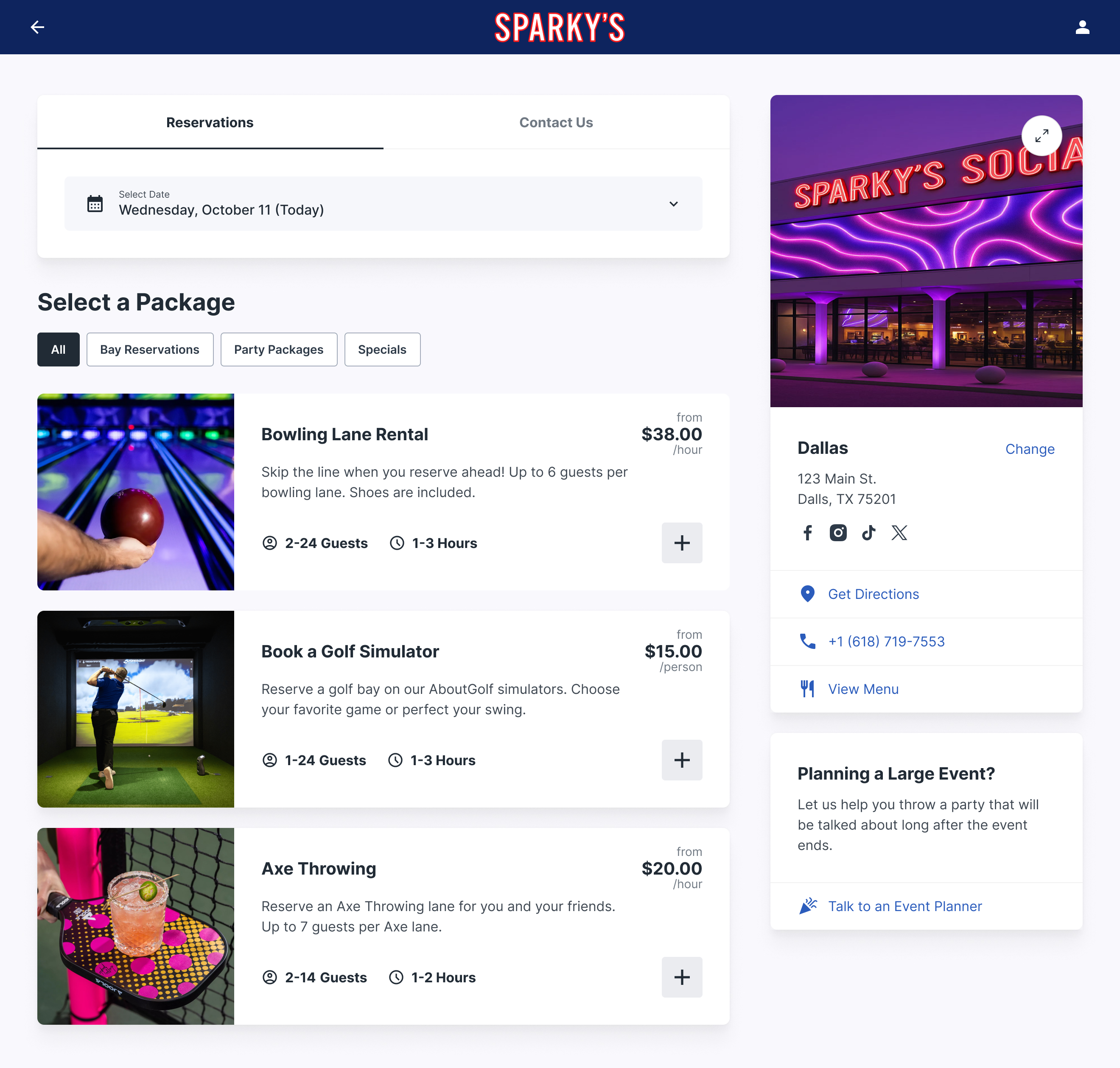
Rex is used by activity-based entertainment venues across the US — bowling alleys, axe throwing venues, go-kart facilities, and multi-activity FECs — and handles the resource-based scheduling, event management, and membership billing that batting cage operations require. The platform also integrates with Tripleseat for corporate event management and with payment processors for secure online deposits.
Staffing a Batting Cage Business
Most batting cage facilities are leanly staffed by design — the operation is relatively simple compared to a full FEC or bowling alley. A 6–8 cage facility typically runs with the following staffing model:
- Front desk / facility attendant — 1–2 staff during open hours. Primary responsibilities: check-in, cage assignments, equipment distribution, light cleaning between sessions. These are typically part-time positions at $14–$18/hour.
- Pitching machine technician — Not necessarily a dedicated employee, but someone with mechanical aptitude who can perform routine maintenance, ball retrieval, and basic repairs. Often handled by the owner or a senior staff member in the early stages.
- Coaches / instructors — Either contracted (cage rental model) or employed (lesson sales model). Contract coaching is simpler operationally; employed coaches require more management but capture more revenue.
- Manager / owner-operator — In most first-time batting cage businesses, the owner is the manager for at least the first 1–2 years. Budget for this reality.
Staffing cost for a modest facility typically runs $8,000–$15,000/month in labor, depending on hours and market wage rates. Good scheduling software that reduces front-desk workload (online booking means customers don't call to reserve cages) directly reduces your staffing overhead.
Marketing Your Batting Cage Business
The best batting cage marketing is hyper-local and community-embedded. You don't need a national brand — you need to be the obvious choice for every youth sports parent within a 20-mile radius.
- Youth league partnerships — Become the designated training facility for local baseball and softball leagues. Sponsor teams, offer league discount memberships, host end-of-season events. This is your highest-ROI marketing channel.
- High school and travel team outreach — Coach referrals are gold. Reach out directly to high school baseball/softball coaches and travel team directors with a clear facility overview and discount for team bulk bookings.
- Google Business Profile — Batting cage searches are overwhelmingly local. Optimize your Google Business Profile completely: photos, hours, services, posts, and active review management. 'Batting cages near me' should surface your facility in the Map Pack.
- Social media (Instagram/TikTok) — Short video content (slow-motion swing analysis, before/after training clips, league highlight reels) performs well in the youth sports community. Post consistently; you're marketing to parents as much as players.
- Corporate event sales — Direct outreach to local HR departments and office managers is underutilized. 'Team building batting cage event' is a specific, compelling offer that stands out from generic team outing options.
- Email list from day one — Collect email addresses at checkout and waiver signing. Segment by customer type (youth player vs. adult recreational vs. corporate). Build a communication rhythm: open hours updates, league registration announcements, birthday party package promotions.
Frequently Asked Questions
How much does it cost to start a batting cage business?
A standalone indoor batting cage facility with 6–8 cages typically costs $207,000–$521,000 to open, depending on your market, facility size, and build-out complexity. Most first-time operators land in the $280,000–$380,000 range. Outdoor batting cage complexes can be opened for significantly less ($80,000–$200,000), but carry seasonal risk in northern climates. Adding batting cages to an existing FEC typically runs $80,000–$150,000 for a 4-cage addition.
Is a batting cage business profitable?
Yes — well-run batting cage businesses generate solid margins, especially once you have a stable membership base. Facilities with 15–25% of cage hours pre-sold through memberships, a strong group events program, and active league and lesson revenue typically achieve 20–35% EBITDA margins at steady state. The biggest challenge is weekday off-peak utilization — the operators who solve this through travel team memberships and corporate events are the most consistently profitable.
How many batting cages do I need to open?
A minimum viable indoor batting cage facility has 4–6 cages. Below four cages, you can't serve simultaneous groups or run a meaningful league program. Six to eight cages is the sweet spot for most markets — enough to handle birthday parties, team events, and casual drop-ins simultaneously without the overhead of a larger facility. Twelve or more cages makes sense in high-density markets with strong youth sports populations.
What permits do I need to open a batting cage business?
Requirements vary by state and municipality, but typically include: a business license, building permits for construction and electrical work, a certificate of occupancy, a state amusement or recreational facility permit (required in many states), liability insurance specific to sports/recreational facilities, and a food service permit if you're serving food. The state amusement permit is the most commonly overlooked requirement — some states require 30–90 days of advance notice before opening. Research your specific state's requirements before signing a lease.
What is the best pitching machine for a batting cage business?
For commercial use, two-wheel pitching machines (JUGS, Rawlings) are the workhorses — they throw both fastballs and breaking balls, handle high volume, and are field-repairable. Arm-style machines (Iron Mike, First Pitch) are budget-friendly and durable but limited to fastballs. For premium cages targeting serious travel teams, three-wheel simulation machines (HitTrax, ProBatter) with integrated analytics justify higher per-session pricing. Most facilities open with a mix: two-wheel machines as the majority, with one or two premium simulation cages for upsell.
What booking software do batting cage businesses use?
Batting cage facilities need booking software that handles resource-level scheduling (each cage is a separate bookable resource), group event packages with deposits, membership billing, and digital waivers. Rex is used by activity-based entertainment venues including batting cage and sports facilities — it handles cage-level resource scheduling, event management, recurring memberships, and integrates with Tripleseat for corporate event management. Legacy facilities often run on custom or locally-built systems, but modern cloud-based platforms offer significantly better guest experience and operational efficiency.
Ready to Open Your Batting Cage Business?
A batting cage business built on the right foundation — the right format for your market, a layered revenue model, and systems that scale — can generate consistent, compounding revenue from a customer base that trains year-round. The venues that succeed long-term are the ones that invest in the guest experience from day one: easy online booking, group event packages that are simple to purchase, and membership programs that convert casual visitors into committed customers.
Rex is trusted by activity-based entertainment venues and sports facility operators across the US. See how Rex handles complex booking, events, and memberships for sports and entertainment venues — and how it can help you open, manage, and grow your batting cage business from day one.